








Sending money across borders, getting paid by an overseas client, or paying for an online service can become complicated when you rely on traditional payment methods. This is where stablecoins can offer a different approach. By keeping their value tied to a particular asset like USD, stablecoins such as USDT and USDC give you a digital way to move and hold money.
Before using stablecoins, you need a reliable way to manage them. That starts with understanding stablecoin wallets, how wallet addresses work, and what you can do with the funds in your wallet.
This article explains stablecoin wallets from the basics and covers how Nigerians can use them to receive payments, send funds, withdraw to Naira, and pay for online services.
What Is a Stablecoin Wallet?
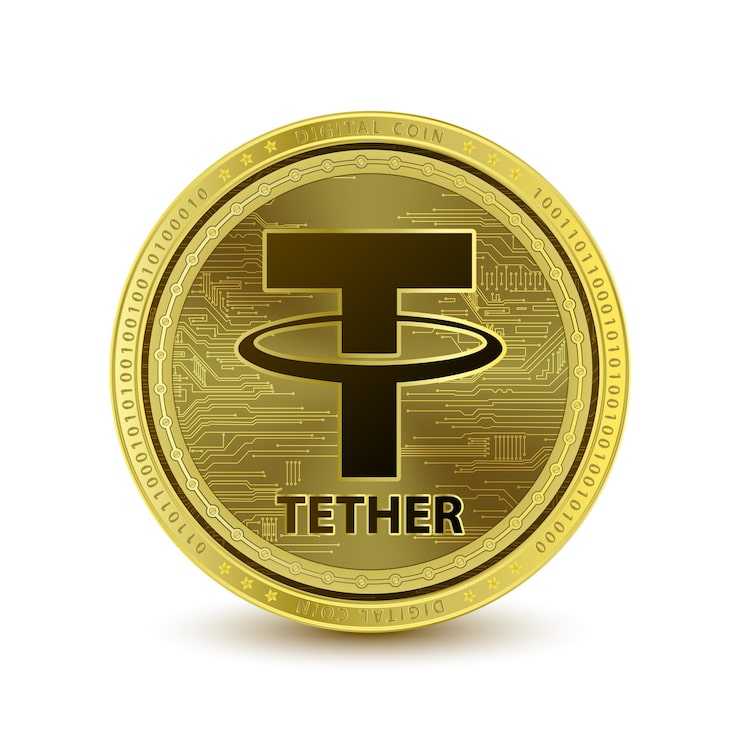
A stablecoin wallet is a digital wallet that lets you receive, hold, and send stablecoins such as USDT and USDC. Unlike a physical wallet that holds cash, a crypto wallet does not store the coins themselves.
The stablecoins remain recorded on their respective blockchains. The wallet manages the keys or account access that lets you control those assets. Depending on the wallet, you may also be able to convert stablecoins, transfer them to another wallet, or use them to fund other financial services.
What Is a Stablecoin Wallet Address?
A stablecoin wallet address is a unique combination of letters and numbers where you can receive stablecoins such as USDT or USDC. It works like a bank account number, but it connects to a blockchain wallet instead of a traditional bank account.
For instance, when someone wants to send you USDT, you provide your USDT wallet address and supported blockchain to them. The sender enters the address, selects the supported blockchain network, and sends the stablecoin. The blockchain records the transaction, and your USDT wallet displays the funds once the transaction receives the required confirmations.
How Does a Stablecoin Wallet Work?
A stablecoin wallet allows you to receive, store, and send stablecoins through a blockchain network. The wallet connects you to the blockchain and gives you a way to manage your assets.
When someone sends stablecoins to you, they use your wallet address as the destination. The transaction then goes through the blockchain network that you choose. The network processes the transaction and records it on the blockchain. Once the required confirmations are complete, your wallet displays the funds in your balance.
To send stablecoins, you enter the recipient’s wallet address and select the stablecoin you want to send. You must also choose the same network supported by both your wallet and the recipient’s wallet before confirming the transfer. Your wallet then approves the transaction and sends it through the selected blockchain. The recipient receives the funds once the network processes the transaction.
The network you choose can also affect the transaction speed and network fee. Most importantly, the receiving wallet must support the same stablecoin and network you use for the transfer.
Types of Stablecoin Wallets
1. Custodial stablecoin wallets
A custodial wallet lets a third-party provider (custodian) manage the keys that control your stablecoins. You access your funds through an account on the custodian’s platform, usually with a password, PIN, or other security method.
The provider handles the technical side of wallet access and security. If you lose your login details, the provider may offer account recovery options. However, you depend on the custodian to maintain access to your funds.
2. Non-custodial stablecoin wallets
A non-custodial wallet gives you control of the keys that provide access to your stablecoins. You manage the wallet yourself instead of relying on a custodian to control your funds. You also take full responsibility for protecting your recovery phrase or private keys. If you lose them, you may lose access to your assets.
3. Hardware stablecoin wallets
A hardware wallet stores your wallet keys on a physical device. You can keep the device offline when you are not making transactions, which can reduce exposure to online threats. Hardware wallets are suitable for people who want to store stablecoins for longer periods. However, you still need to protect the device and its recovery information because losing either can affect access to your assets.
4. Integrated stablecoin wallets
An integrated stablecoin wallet combines stablecoin management with other financial services. Instead of using one platform to hold USDT or USDC and another platform for payments or international transfers, you can access these services through one platform. Pouchers is one of the most integrated stablecoin wallets because you can fund it with USDT or USDC across supported blockchain networks.
You can use the balance for different financial services within the platform. The wallet supports multiple currencies, including USD, EUR, GBP, and CAD, giving you a single place to manage money across currencies.
Pouchers also offers a virtual dollar card that you can fund from your wallet or with stablecoins. You can use the card for international online payments, including subscriptions, shopping, advertising, software, and travel.
How Nigerians Use Stablecoin Wallets Today
1. Receive international payments
Nigerians use stablecoins as a way to receive money from clients, employers, and platforms in other countries when they support stablecoin payments.
2. Hold value
Nigerians also use stablecoins to store value because they are designed to maintain a stable price by being backed or pegged to an underlying asset. Depending on the stablecoin, that asset can be a fiat currency such as the US dollar or euro, or a physical asset such as gold.
For example, USDT and USDC are designed to maintain a 1:1 value with the US dollar. This means 1 USDT or 1 USDC is intended to remain worth about $1, unlike cryptocurrencies such as Bitcoin, whose prices can change significantly.
3. Send funds
Individuals and businesses use stablecoins to transfer funds without relying on traditional bank transfers. The recipient receives the stablecoins in their wallet after the transaction is processed on the blockchain. The transfer time and network fee depend on the stablecoin and blockchain network used.
4. Make payments
You can also use stablecoins to make online payments through services that support them. Pouchers makes this possible with our Virtual Dollar Card, which users can fund with supported stablecoins such as USDT and USDC.
Once funded, the card can be used for online payments such as subscriptions, shopping, software, advertising and travel. This allows you to use your stablecoin balance for everyday online spending without sending stablecoins directly to every merchant.
How to Accept Stablecoin Payments in Nigeria
You can accept stablecoin payments by giving your client or customer a wallet address that supports the stablecoin they want to send. The payment goes directly to that wallet through the selected blockchain network. You can then keep the stablecoins in your wallet or use a platform like Pouchers to receive stablecoins and convert them to Naira if they want.
Step 1: Download the Pouchers app:
Download the Pouchers app from the Google Play Store or the Apple Store and create a Pouchers account. If you already have an account, simply sign in.
Step 2: Select “USD” on the homepage:
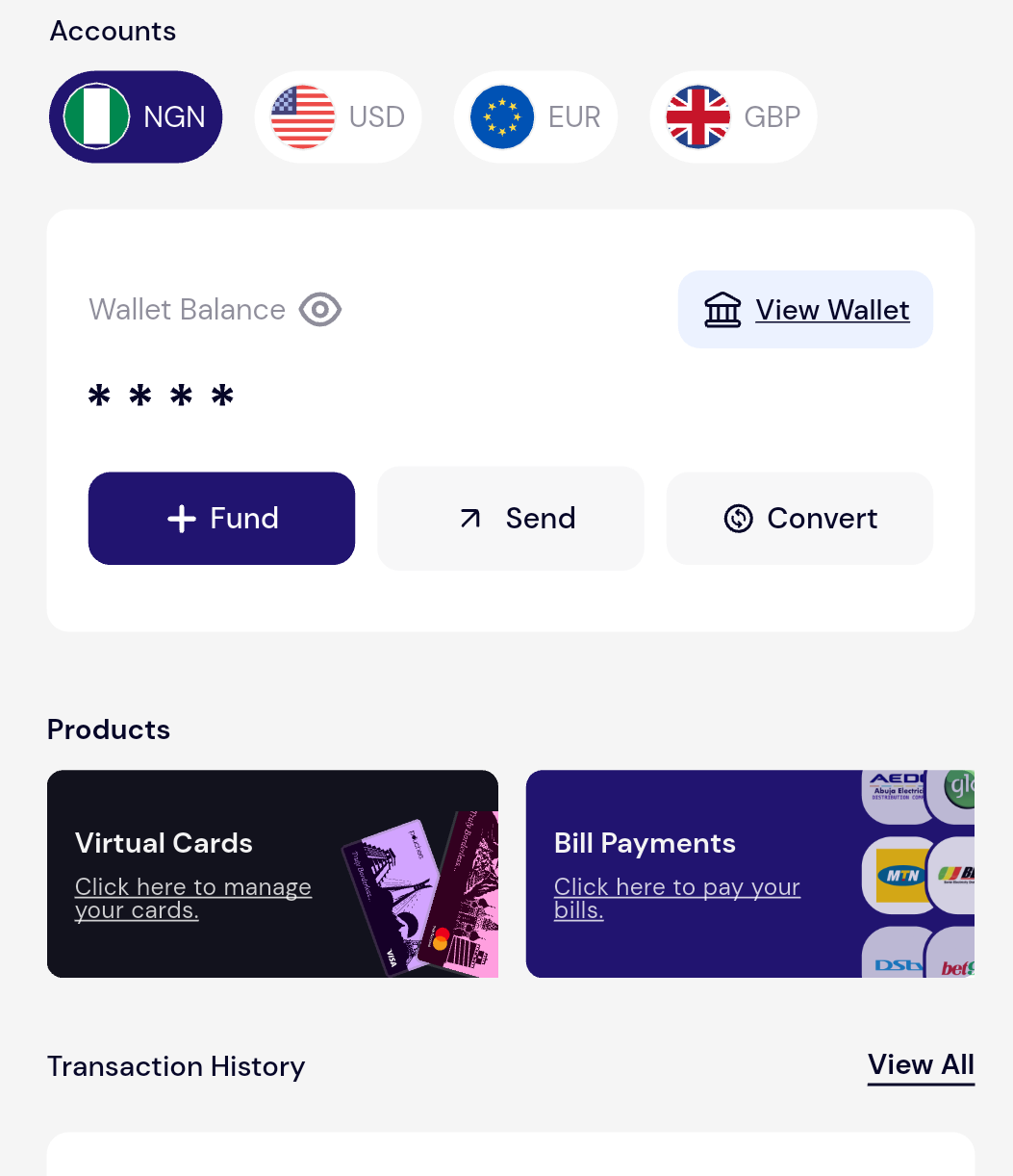
Select “USD” on the homepage and click on “Fund.” Then select “Stablecoin” from the subsequent menu.
Step 3: Choose your preferred stablecoin:
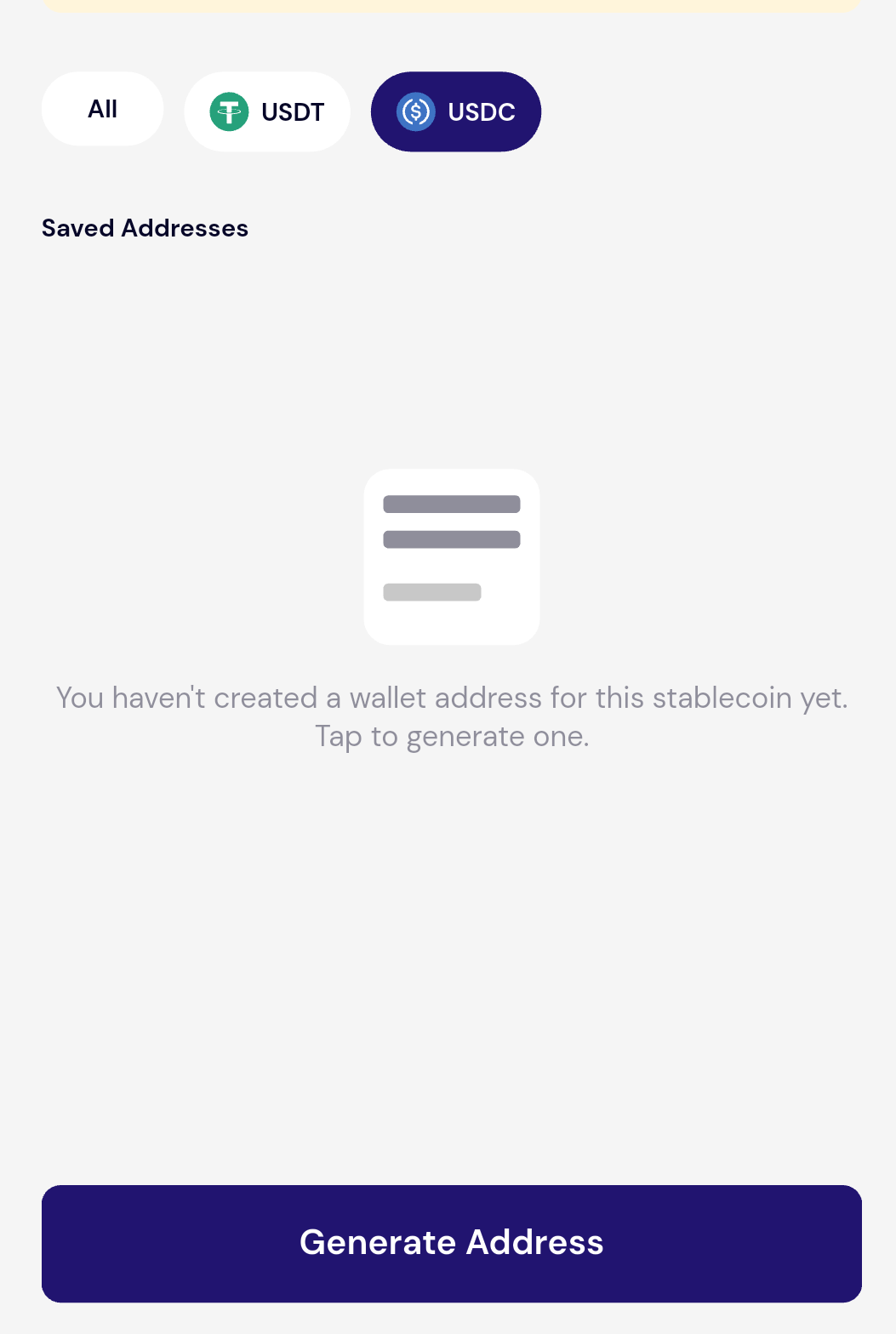
Select the stablecoin you want to receive and click on “Generate Wallet.” Pouchers supports both USDT and USDC.
Step 4: Select a supported network:
Choose the blockchain network available for the stablecoin you selected. Tick the “I understand and agree” box and click “Generate Wallet” to proceed.
Step 5: Copy your wallet address:
Pouchers generates a wallet address for your selected stablecoin and network. Copy the address and send it to your client or customer. You can also scan the QR code to receive payment.
Step 6: Receive the payment:
Your client sends the agreed amount to the address. Pouchers credits the funds to your USD Wallet after the required blockchain confirmations.
How to Withdraw Stablecoins in Nigeria
A stablecoin wallet by itself does not automatically turn USDT or USDC into Naira. You need a service that supports the conversion. Pouchers allows you to manage your stablecoins and convert your USD to NGN after funding your USD account with USDT or USDC.
Step 1: Select “Convert on the homepage:
Sign in to your Pouchers account and select “Convert” on the app’s homepage.
Step 2: Enter the amount:
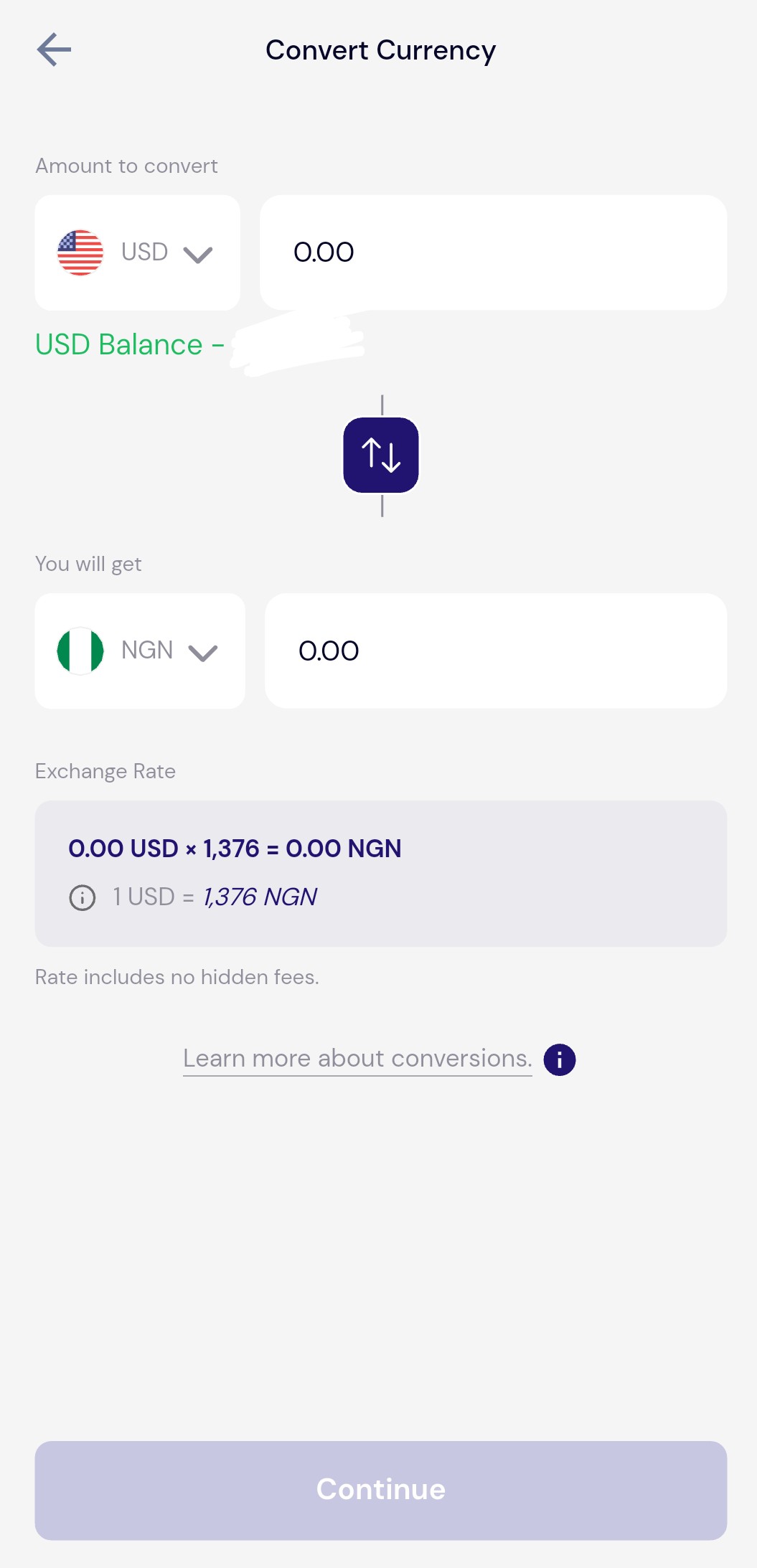
Enter the amount you want to withdraw, then select “Continue” to complete your conversion.
Step 3: Select “Send” on the homepage:
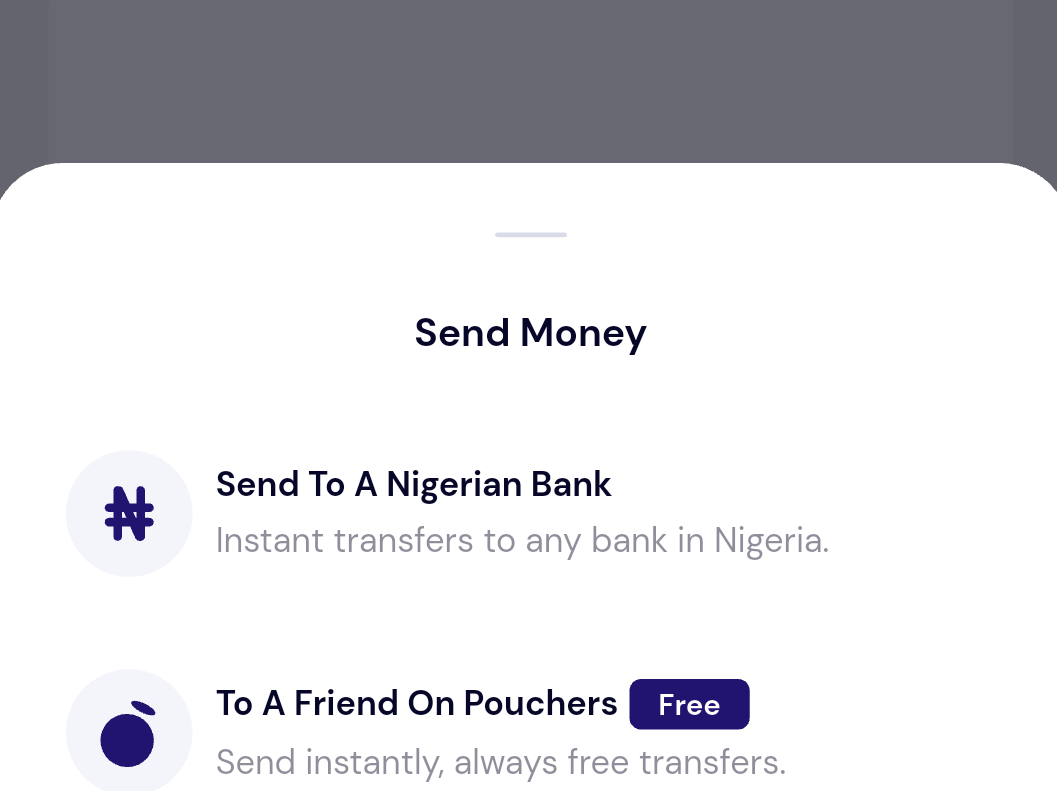
Select “NGN” on the homepage and click “Send.” Then select “Send To A Nigerian Bank” from the subsequent menu.
Step 4: Enter the transaction details:
Enter the beneficiary’s account number and select their bank. Then enter the amount you want to send and click Continue to complete your withdrawal.
Step 5: Receive the funds in your bank account:
Once the withdrawal is processed, Pouchers sends the Naira directly to your Nigerian bank account.
Can You Spend Stablecoins Directly?
You can use stablecoins for spending when the service or payment platform supports them. However, many online businesses still support only card payments rather than a direct blockchain transfer.
Pouchers offers a Virtual Dollar Card that you can fund with USDT or USDC. You can then use the card for various online payments, including subscriptions, shopping, advertising, software, and travel.
For example, you can use the card for services such as Netflix, Spotify, Amazon, Canva, Google Ads, and Meta Ads. Pouchers says users can fund the card directly from their wallet or with supported stablecoins.
Frequently Asked Questions
1. What is a stablecoin wallet?
A stablecoin wallet is a digital wallet that lets you receive, hold, and send stablecoins such as USDT and USDC.
2. Does a stablecoin wallet store my stablecoins?
The stablecoins remain recorded on a blockchain. The wallet manages the keys or account access that lets you control those assets.
3. What is a stablecoin wallet address?
It is the address another person or platform uses to send stablecoins to your wallet. You must use the correct address and supported network for the transaction.
4. Can I receive USDT and USDC in Pouchers?
Yes. Pouchers supports both USDT and USDC deposits through the networks shown in the app.
5. Can I use stablecoins to fund a virtual Dollar card?
Yes. Pouchers allows users to fund their Virtual Dollar Card with supported stablecoins, including USDT and USDC.
6. Can I convert stablecoins to Naira?
You need a service that supports stablecoin-to-fiat conversion. Pouchers supports USD-to-NGN conversion and stablecoin funding for its USD Wallet.
Conclusion
A stablecoin wallet lets you receive, hold, and send digital assets such as USDT and USDC. Nigerians can use these wallets to receive international payments, move money, and hold stablecoins. The type of wallet you choose determines how you manage access to your funds. Integrated platforms can make the experience simpler by connecting stablecoin balances with other financial services.
Pouchers combines USDT and USDC funding, USD accounts, and a Virtual Dollar Card, giving you a single platform for managing stablecoins and using them for international payments and online spending.