









Choosing the right virtual dollar card will save you from the hassle and frustration of failed payments and inflated costs. Pouchers and Raenest are two of the leading virtual dollar card providers that Nigerians use when paying for international subscriptions, digital products, and online ads billed in USD. However, their fees, spending limits, and card features differ.
In this Pouchers vs Raenest virtual dollar card comparison, we’ll break down the features, fees, and available networks to help you decide which option is cost-effective for your needs.
Pouchers vs Raenest Virtual Dollar Card at a Glance
| Feature | Pouchers | Raenest |
| Card creation fee | $2 Standard / $5 Premium | $3 |
| Monthly maintenance fee | Free | Free |
| Funding fee | Free | Free |
| Per-transaction fee | None on USD spending | $0.70 per successful transaction |
| Declined payment fee (insufficient funds) | $0.50; free if the card is frozen | $0.40 |
| International transaction fee | 2.5% + $0.50 on eligible cross-border transactions | 2% + $0.40 on purchases or refunds from non-US websites |
| Card network | Visa and Mastercard | Visa |
| Number of cards | Up to two Standard and two Premium cards | One active card at a time |
| Spending limits | $10,000 per transaction; $50,000 daily; $400,000 monthly per card | Up to $20,000 daily and $60,000 monthly, depending on KYC level |
| Apple Pay / Google Pay | Premium card | Supported |
| Billing address | US address | US or local address options |
| Funding source | Pre-funded card balance | Raenest wallet balances |
Pouchers vs Raenest: Visa and Mastercard Options
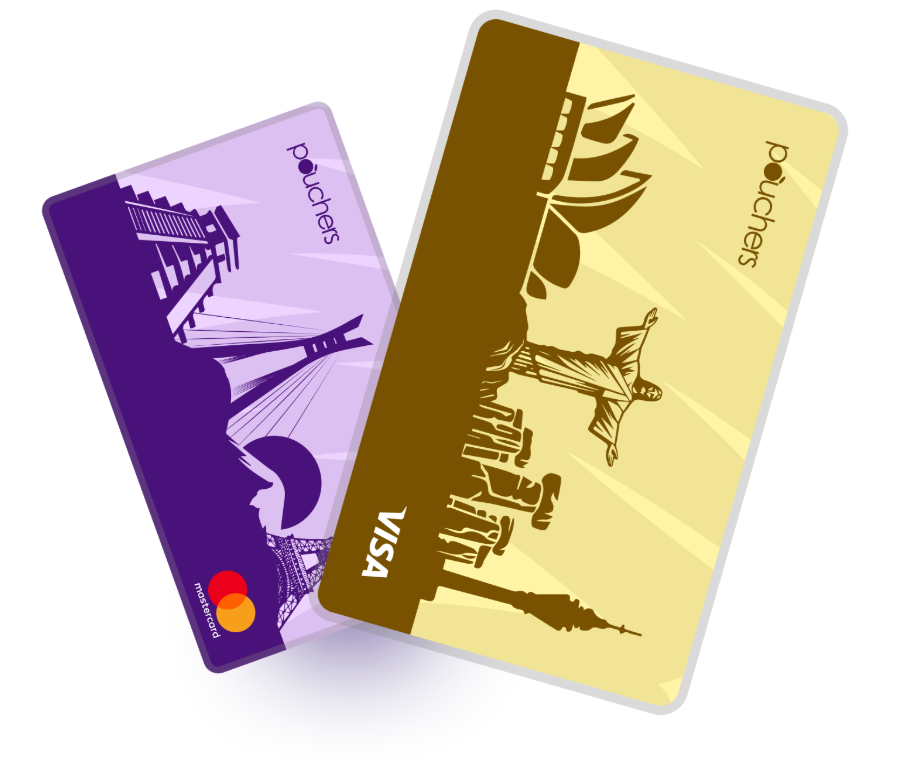
Pouchers lets you choose between Visa and Mastercard virtual dollar cards, while Raenest offers only Visa. This gives Pouchers users more flexibility when making international payments. If a merchant doesn’t accept one card network, you can try the other.
Which Virtual Dollar Card Is Cheaper: Pouchers or Raenest?
| Fee | Pouchers Standard | Raenest |
| Card creation | $2 | $3 |
| Monthly maintenance | Free | Free |
| Card funding | Free | Free |
| USD transaction fee | None | $0.70 per successful payment |
| Cost for 1 USD payment (including card creation) | $2 | $3.70 |
| Cost for 5 USD payments (including card creation) | $2 | $6.50 |
| Cost for 30 USD payments (including card creation) | $2 | $24 |
Pouchers virtual dollar card is cheaper for regular spending because it doesn’t charge a per-transaction fee on USD payments, and you pay the one-time card creation fee. Meanwhile, Raenest charges $0.70 for every successful payment.
The more you pay for subscriptions, ads, and online tools, the more Raenest’s $0.70 per-transaction fee adds to your spending costs. This makes Pouchers the more affordable option for frequent online spending.
Note: The estimates in the table include the one-time card creation fee and successful USD payment fees. They exclude cross-border transaction charges and declined fees.
Pouchers vs Raenest: How Many Virtual Dollar Cards Can You Have?
Pouchers lets you hold up to four virtual dollar cards: two Standard and two Premium cards, with one Visa and one Mastercard of each type. Raenest, on the other hand, allows only one active virtual card at a time.
Multiple cards make it easy to separate spending. For example, you can use one card for subscriptions and another for ad payments. This helps you manage budgets, track transactions, and keep better control of your spending.
Pouchers vs Raenest: Which Card Has Higher Spending Limits?
Pouchers has a higher overall spending limit than Raenest, with a monthly limit of $400,000 per card compared with Raenest’s maximum of $60,000. Additionally, Pouchers allows a higher daily spending limit of $50,000, compared with Raenest’s $20,000.
| KYC level | Raenest daily limit | Raenest monthly limit |
| Level 1 | $7,000 | $21,000 |
| Level 2 | $10,000 | $25,000 |
| Level 3 | $12,000 | $36,000 |
| Level 4 | $15,000 | $45,000 |
| Level 5 | $20,000 | $60,000 |
In summary, Pouchers allows up to $10,000 per transaction, $50,000 daily, and $400,000 monthly per card. Meanwhile, for Raenest, it depends on your KYC verification level, with higher levels unlocking higher spending limits. Raenest also restricts transactions to 50 daily and 200 monthly.
Raenest vs Pouchers: What Happens When a Payment Is Declined?
Pouchers charges a $0.50 fee when a payment fails because of insufficient funds. However, it does not charge this fee when your card is frozen. Raenest, on the other hand, charges $0.40 for declined payments caused by insufficient wallet balances.
Additionally, a failed subscription payment does not terminate your Pouchers card, but Raenest automatically freezes a card after three consecutive insufficient-funds declines. You can unfreeze it yourself, but repeated declines may eventually lead to card termination.
It’s important to keep enough money in your wallet before setting up recurring subscriptions, so you can avoid decline fees and interruptions to your payments.
Pouchers vs Raenest: Apple Pay and Google Pay Support
Both Pouchers and Raenest support Apple Pay and Google Pay, which lets you make contactless payments at compatible terminals using your phone or other supported devices.
With Pouchers, you can enjoy this feature with the Premium virtual card, available for a one-time creation fee of $5. Raenest also supports both digital wallets on its Visa virtual card.
Pouchers or Raenest: Which Should You Choose?
- If you make frequent online payments, choose Pouchers: Pouchers charges $2 to create a Standard card, with free top-ups and no transaction charges on USD spending. This can save you money if you regularly pay for subscriptions, advertising, software, and other online services.
- If you need multiple cards for different expenses, choose Pouchers: You can create up to two Standard and two Premium cards, one Visa and one Mastercard of each type. For example, you can dedicate one card to subscriptions, another to business expenses, and a third to personal purchases.
- If you want higher spending limits, choose Pouchers: Each Pouchers card supports up to $10,000 per transaction, $50,000 daily, and $400,000 monthly. This is much higher than Raenest’s offer.
- If you want contactless payment options, Pouchers has the edge. Pouchers Premium cards support Apple Pay and Google Pay, as well as in-store payments where accepted.
Overall, Pouchers virtual dollar card is the cheaper option for frequent online spending, especially if you want multiple cards, a choice of networks, and access to stablecoin funding.
How to Get a Pouchers Virtual Dollar Card
- Download the Pouchers app on the App Store or Google Play Store, sign up, and verify your account.
- Fund your wallet with Naira and go to Virtual Cards to create a card. Choose either the Standard or Premium card.
- Top up your card with the funds in the Naira wallet. Top-ups are free.
- Use the card number, expiry date, CVV, and billing address provided in the app when making online payments. If you need more help, here is a detailed guide on how to create the Pouchers virtual dollar card
Frequently Asked Questions
1. Is Pouchers cheaper than Raenest?
Yes, for regular dollar spending. Pouchers charges $2 to create a Standard card and has no per-transaction fee on USD spending. Raenest charges $3 to create a card and $0.70 for every successful transaction.
2. Does Raenest charge a fee on every transaction?
Yes. Raenest charges $0.70 for every successful virtual card transaction. Additional fees may apply to purchases from non-US websites.
3. Is Geegpay the Same as Raenest?
Yes. Geegpay was renamed Raenest. The platform now operates under the Raenest name.
4. Can I Have Both a Pouchers and a Raenest Card?
Yes. You can create and use cards from both platforms. You don’t have to choose one exclusively.
5. Is the Pouchers Card Visa or Mastercard?
Pouchers offers both Visa and Mastercard virtual cards. You can choose your preferred network when creating your card.
Sources Used:
- The Raenest Card Just Got Upgraded – Raenest
- USD Virtual Card Charges on Raenest – Raenest Help Centre
- Virtual Card Spending Limits – Raenest Help Centre
- Raenest Virtual Card Regional & Usage Guidelines – Raenest Help Centre