








As a skilled professional based in Nigeria and working with international clients, it is easy to run into frustration when receiving international payments. After your hard work, you want to sit back and relax, not face delayed payments or find that a large percentage has gone to fees or unfavorable rates.
The good news is, you have options. You can open a dollar account through a traditional bank or use a digital alternative like Pouchers that offers more flexibility. In this guide, we compare both options side by side and show you how to open a dollar account in Nigeria with each.
1. How to Open a Dollar Bank Account at a Nigerian Bank
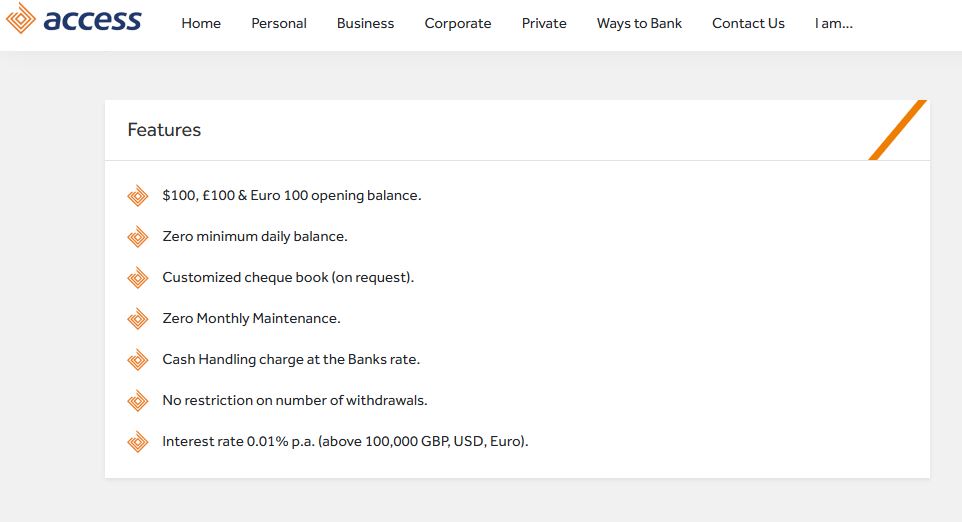
Traditional banks allow you to open a dollar account in Nigeria, commonly called a domiciliary account. With a domiciliary account, you can receive, hold, and send foreign currencies such as US dollars, pounds, and euros. It is a popular option for freelancers, remote workers, businesses, and individuals who receive payments from abroad.
Some banks allow you to start the application process online. However, you may still need to visit a branch to complete the account opening process and submit the required documents.
The following steps guide you on how to open a dollar account in Zenith, Access Bank, UBA, First Bank, GTB, and any other banks in Nigeria:
- Start by choosing a bank that offers domiciliary account services. You can choose the bank you already use or compare different banks based on their fees, requirements, and foreign-currency services.
- Check for the bank’s dollar account requirements and prepare the necessary documents.
- Obtain and complete the domiciliary account opening form. Depending on the bank, you may need to visit a branch or start with an online application portal.
- Submit the required KYC documents. These may include your BVN, NIN, passport photograph, proof of address, and reference forms where required.
- Fund the account if required. Some banks require an initial deposit to open or activate a domiciliary account, while others may have different funding requirements.
- After verifying your documents and references, the bank will activate your account and provide your account details, such as your account number and the bank’s SWIFT/BIC code, which may be required for receiving international transfers.
- Once you open a USD bank account in Nigeria, you can receive money into the account through cash deposits, wire transfers, and transfers from other domiciliary accounts in Nigeria.
Requirements to Open a Dollar Account at a Nigerian Bank
The exact requirements vary per bank, but most institutions request similar documents. Common domiciliary account requirements in Nigeria include:
- KYC (know your customer) verification for a dollar account: International Passport, National Identification Number (NIN), or Driver’s Licence
- Utility bill or another proof of address document
- Completed account opening form
- Bank Verification Number (BVN)
- Recent passport photograph
- Two reference forms from current account holders, depending on the bank.
Some banks require a minimum opening balance to activate your domiciliary bank account. This simply means you need to make an initial deposit before activation.
Challenges of Opening a Dollar Account at a Nigerian Bank
A domiciliary account may be a popular option for receiving and holding foreign currencies. However, it comes with some requirements and limitations that may make it less suitable for certain users.
1. No Direct Naira Funding Method
You cannot transfer Naira into a domiciliary account directly or through the bank app. Instead, you’d need to convert Naira to dollars first, either by purchasing foreign currency directly from your bank electronically or by buying cash from a Bureau de Change and depositing it in person.
Spending is also an extra step. While you can hold and receive funds in the account, making purchases on digital stores requires applying for a separate linked dollar card through your bank.
2. Account Opening Requirements
You need several documents to open a domiciliary account in Nigeria. Besides that, you must provide two referees (who have accounts with the bank), and they must complete their forms before your application can be approved.
3. Limited Accessibility
To this day, some banks still require customers to visit their nearest branch to complete parts of the account-opening and verification process. It can be much slower and more tiresome compared to fully digital alternatives.
4. Minimum Funding Requirements
For some banks, you need to have a minimum domiciliary account opening balance of $50, and this can go up to $100 for others. This could be a barrier for casual users.
5. Slower Setup Process
The verification and approval process takes time, between 48 and 72 hours. Users who want to start receiving payments immediately can easily become frustrated.
6. High Withdrawal Charges
Banks may charge fees when you withdraw or transfer foreign currency from a domiciliary account. Many charge a small percentage on cash withdrawals, often capped at $10 regardless of how much you withdraw.
Others, like Union Bank, charge a 0.5% fee on current accounts, which can add up faster on larger or more frequent transactions. International transfers cost even more: expect a flat SWIFT fee of roughly $18 to $25 depending on the bank and currency, plus a percentage fee of 0.1% to 0.75% on top.
2. How to Open a Dollar Account with Pouchers
Pouchers is a fintech platform that allows you to open a dollar bank account without visiting a bank branch. You can open and manage your dollar account directly from your phone and receive USD payments from U.S. bank accounts. It caters to freelancers, remote workers, creators, and businesses receiving payments from international clients, employers, and platforms such as Upwork, Fiverr, Stripe, PayPal, and Deel.
Once you receive your funds, you can move them to your local bank account by converting USD to NGN. You can also fund your Pouchers virtual dollar card to pay for things globally. This gives you different ways to use your USD earnings.
The following steps show you how to open a dollar account with Pouchers:
Step 1: Download the Pouchers dollar account app and sign up to create a Pouchers account.
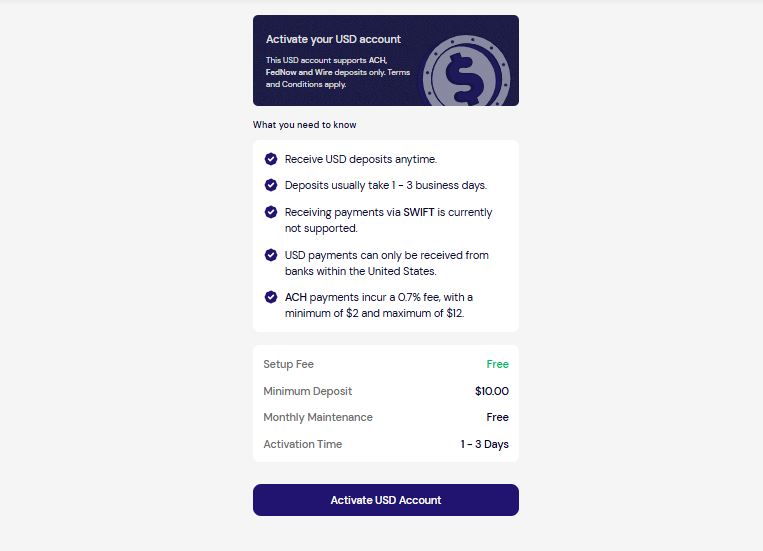
Step 2: Go to the USD Wallet. Inside the wallet, switch to the Fiat tab and tap Activate Wallet. If you haven’t verified your phone number yet, you’ll be prompted to do that first. Then Tap Activate USD Account.
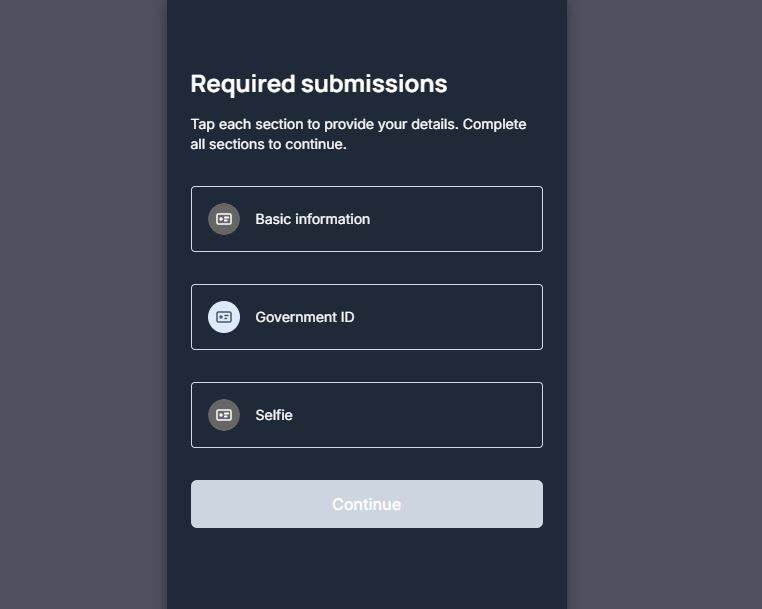
Step 3: Complete identity verification, basic details, a government-issued ID, and a selfie.
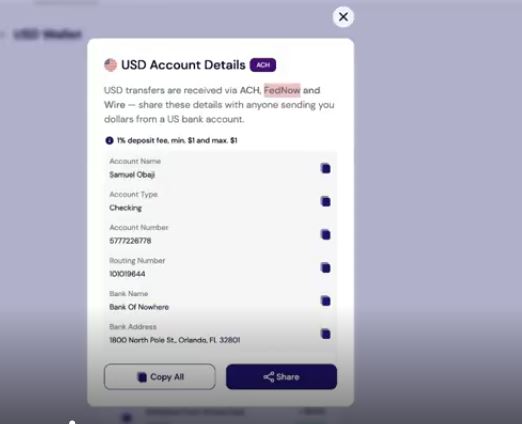
Step 4: Once verification is complete, your USD bank account is ready to use. The dollar account comes with an account name, account number, routing number, bank name, and bank address.
Bank vs. Pouchers Dollar Account: Side by Side
One of the biggest differences between the two is how you can move money in and out. With a domiciliary account, you can receive and send USD, but you generally cannot fund the account directly with Naira. Pouchers, on the other hand, lets you switch between USD and Naira within the app, giving you more flexibility in how you receive, convert, and use your money.
Here’s how the two compare:
| Factor | Bank | Pouchers |
| Account setup | Requires a bank application; may involve a branch visit | Open online through the Pouchers app |
| Fund with Naira | Cannot generally be deposited directly | Convert Naira to USD through the platform |
| Currency conversion | Bank’s exchange rate and charges apply | Convert to NGN, CAD, EUR, or GBP with no conversion fees |
| Time to receive a wire/salary deposit | SWIFT wire transfers typically take 1–5 business days, most commonly 1–3 | FedNow: seconds. ACH: 1–3 business days. |
| Minimum opening deposit | $50–$100 depending on the bank (e.g., GTBank: $50; Access Bank, Zenith, UBA: $100) | $10 |
| Inbound deposit fee | Bank: Varies by bank and transfer. SWIFT fees may be paid by the sender (OUR), shared (SHA), or charged to the recipient (BEN). | ACH deposits: 0.7% (min $2, max $12). |
| Local transfer (outbound) | Send to other domiciliary accounts in Nigeria, or to a local bank account. Fees: Access Bank charges 0.05% of the transaction value, capped at $10. Union Bank’s Domiciliary Current account charges a 0.5% transfer fee. | Convert USD to Naira within the app, then transfer the Naira out to a bank account. Fee: ₦100 |
| International transfer (outbound) | Sends money abroad via SWIFT. Flat SWIFT fee (~$18–$25 depending on bank/currency), plus a percentage fee (0.1%–0.75% depending on bank) | Sends money internationally through its stablecoin wallet (USDT/USDC). Fee: 1% withdrawal fee, plus network fees depending on the blockchain used. |
| Monthly maintenance | Varies by bank | Free |
| Access | Bank branches and digital banking channels | Fully managed from your phone |
| KYC requirements | BVN, NIN, ID, utility bill, sometimes two referee forms | BVN, government ID, and selfie |
| Branch visit | May be required | Not required |
| SWIFT transfers | Availability depends on the bank | Not currently supported |
Who Should Use a Domiciliary Account (and Who Should Choose Pouchers)
Both options let you hold and receive US dollars, but they serve different needs. Here’s a quick way to figure out which one fits.
1. When a Domiciliary Account Makes Sense
- You regularly receive SWIFT wire transfers: SWIFT is the international network used by banks to send money across borders. Since dom accounts support it, you can receive transfers from banks almost anywhere in the world, not just the US. Availability varies by bank, and it’s useful if your international clients or employer pay this way.
- You don’t mind the setup process: You’re comfortable with a $50–$100 minimum deposit, documentation requirements, and a possible branch visit in exchange for a traditional banking relationship.
2. When You Should Choose Pouchers
- You want to fund your account with Naira: Unlike a dom account, Pouchers lets you convert Naira into USD directly on the platform; no need to source foreign currency elsewhere first.
- You want lower fees and no conversion charges: Pouchers converts between USD, NGN, CAD, EUR, and GBP with no conversion fees, and its $10 minimum deposit is far below what most banks require.
- You receive USD payments from U.S. bank accounts: Pouchers is built specifically for ACH, FedNow, and Wire deposits from the U.S., useful for freelancers working with American clients or platforms.
- You want to avoid branch visits and referee forms: KYC is just a BVN, ID, and selfie, done entirely from your phone.
- You want a virtual dollar card without separate formal application: A card is available directly through Pouchers, rather than requiring a separate application through your bank.
Frequently Asked Questions
1. Which app can I use to open a dollar account in Nigeria?
Platforms like Pouchers let you open a USD account directly from your phone, without a branch visit. If you need a traditional bank-backed account instead, a domiciliary account at any major Nigerian bank is the standard route.
2. How much does it cost to open a dollar account in Nigeria?
Domiciliary accounts typically require a minimum opening deposit of $50 to $100, depending on the bank. Pouchers requires a minimum deposit of $10.
3. Can I transfer Naira to a dollar account?
You cannot transfer Naira directly into a domiciliary account, since it only holds and moves foreign currency. To fund one with Naira-derived money, you’d first need to buy foreign currency through a Bureau de Change or FX channel, then deposit that as cash at your bank. Pouchers removes that extra step: you can convert Naira to USD directly on the platform.
Conclusion
Choosing between a domiciliary account and Pouchers comes down to how you receive money and how much flexibility you need. A domiciliary account remains a solid, bank-backed option for holding foreign currency and receiving SWIFT transfers. However, traditional banks can introduce additional processes and bureaucracy when managing your foreign currency.
If you want a more flexible way to manage your funds, convert Naira into USD, receive U.S. ACH payments, and skip the branch visit entirely, Pouchers is the more convenient option.
[Open Your Pouchers USD Account]