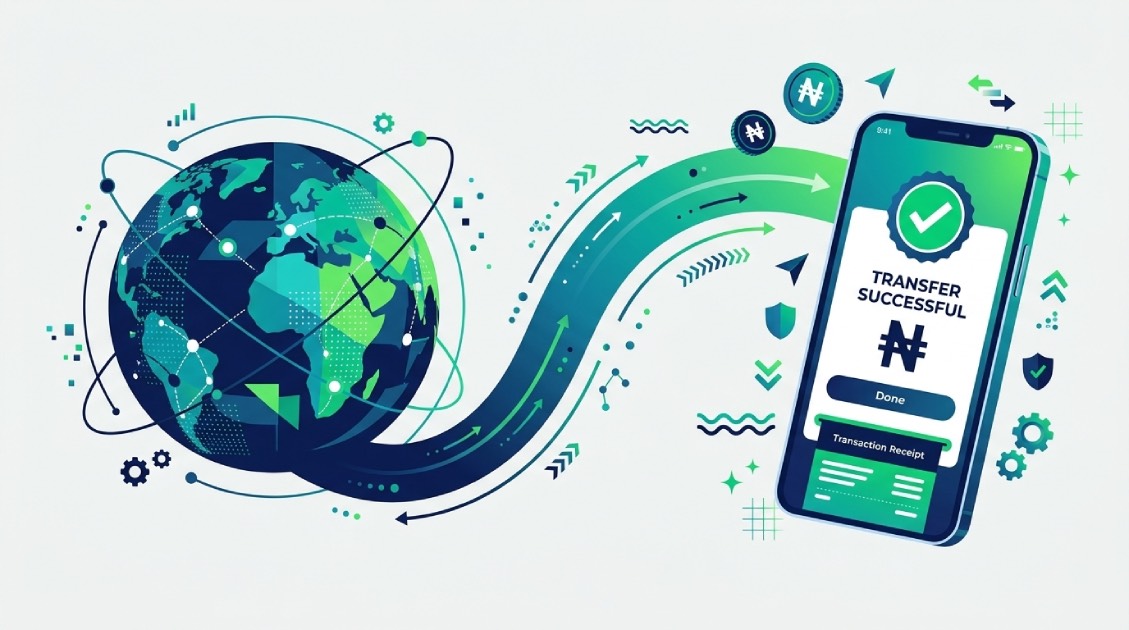









Every Nigerian business that deals across borders knows the wait. A supplier in China needs paying, but the bank wire takes days and loses a chunk to fees. A client in London sends your money, and by the time it clears, the rate has moved against you. Some months, the dollars you need simply might not be there.
Stablecoins fix that. More and more Nigerian businesses now use them to pay suppliers, get paid by clients, and hold value in dollars – without the delays and limits of the traditional system.
This is a quick, practical guide to business stablecoin adoption in Nigeria: why it works and more.
What Stablecoin Adoption Means for Your Business
A stablecoin is a type of cryptocurrency designed to maintain a stable value. Most businesses use dollar-pegged coins, typically USDT or USDC, which stay worth about $1.
In practice, business adoption of stablecoins isn’t complicated. It simply means using these stablecoins to receive, hold, and send international payments using modern platforms like Pouchers:
- Get paid in stable value directly from international clients, without losses to exchange-rate swings.
- Protect working capital in a reserve that Naira devaluation cannot erode.
- Settle supplier invoices in minutes instead of waiting days for bank wires.
What are Stablecoins?
If stablecoins are new to you, our article, What Are Stablecoins? covers the basics: what they are and how they hold their value.
Here’s the short version. Stablecoins are cryptocurrencies built to avoid the price swings that make Bitcoin and other tokens risky to hold. Most businesses work with dollar-pegged coins like USDT and USDC, which are backed by real dollar reserves, so each coin stays close to $1. That price stability, paired with the speed of blockchain transfers, is what makes stablecoins useful for the cross-border payments this guide covers.
Why Nigerian Businesses Are Adopting Stablecoins
Nigeria is one of the busiest stablecoin markets in the world. In its 2025 Geography of Cryptocurrency Report, Chainalysis ranked the country second globally for grassroots crypto adoption, with roughly $92 billion in on-chain value received in the year to June 2025, and stablecoins, led by USDT and USDC, make up a large share of that.
This is not hype. It is businesses and everyday people solving real problems.
Here is what stablecoin adoption solves for a Nigerian business.
Skip SWIFT delays
A traditional bank wire moves through several correspondent banks before it lands, which is why it can take two to five working days. A stablecoin transfer settles in minutes, at any hour, including weekends and public holidays. Your supplier gets paid, your goods move, and your cash keeps working.
Get past bank dollar limits and shortages
International card limits, blocked transactions, and dollar shortages are a constant headache. Stablecoins give you dollar value directly, so you are not queuing for an allocation that may never come. You hold and move real dollars on your own schedule.
Protect your money from Naira swings
When the Naira weakens, money sitting in Naira buys less over time. Holding part of your revenue in a dollar-linked stablecoin protects your working capital, so a payment you receive today is still worth its dollar value next month.
Pay less in fees
Cross-border payments through banks and remittance services stack up charges, wire fees, intermediary cuts, and exchange-rate markups that are easy to miss. A stablecoin transfer usually costs a small, flat amount, no matter the size. Across many payments, that goes straight to your margin.
It is legal and regulated
Digital assets are legal to own and use in Nigeria. The Investments and Securities Act, signed into law in March 2025, formally recognises them as securities under the Securities and Exchange Commission, and licensed platforms now operate within a clear framework.
Adoption is not a grey area; it is a regulated part of the financial system.
How Pouchers Makes Stablecoin Adoption Simple
Pouchers gives your business the benefits of stablecoins without asking you to learn crypto. Under the hood, it runs on stablecoins; on your screen, you see Naira and dollars.
With Pouchers, you can:
- Hold both a Naira wallet and a dollar wallet in one place.
- Convert between Naira and dollars instantly, at transparent, upfront rates.
- Send funds to suppliers and receive payments from clients abroad, without the usual banking delays.
- Get real-time notifications on every transaction, so you are always in control.
Setup is quick: create an account, complete a short KYC, fund your wallet, and you are ready to move money across borders.
How Nigerian Businesses Use Stablecoins
The theory is fine. Here is where stablecoins earn their place in a real business.
- Paying overseas suppliers: Importers settle manufacturers in China, the UK, or Turkey in minutes, and many suppliers now prefer it because the payment is fast and final.
- Getting paid by international clients: Agencies, freelancers, and service exporters receive the full dollar value from clients abroad, without a slow wire shrinking the amount.
- Holding a dollar reserve: Businesses keep part of their earnings in dollars to steady their books against Naira moves, then convert to Naira only when they need to spend locally.
- Paying for global tools and ads: Software subscriptions, cloud services, and digital ad platforms all bill in dollars. A dollar balance and a virtual dollar card keep those payments from failing.
- Paying remote staff and contractors: Teams spread across countries get paid on time, in dollars, in one quick batch.
How to Pay a Supplier with Stablecoins in Nigeria
This is the step most businesses want to get right, so here it is clearly. The example uses USDT, the coin most suppliers ask for, but the steps are the same for USDC.
Step 1: Agree on the terms
Confirm your supplier accepts stablecoin payments, and ask which coin and which network they use. Agree on the amount so there is no confusion about the figure.
Step 2: Get their wallet address
Your supplier sends you their wallet address – a string of letters and numbers that works like an account number for receiving the coins. Make sure the network they give you matches the one you will send on.
Step 3: Fund your dollar balance
Top up the dollar side of your account with enough to cover the payment. On a platform like Pouchers, you fund from your Naira balance at a clear, upfront rate, so you see the Naira cost before you confirm.
Step 4: Double-check the address
Copy and paste the address exactly, then check the first and last few characters against what your supplier sent. Stablecoin transfers are final; there is no bank to call and reverse a mistake – so this step matters.
Step 5: Send the payment
Confirm the amount and send. The transfer usually settles within minutes, and you will see it leave your balance straight away.
Step 6: Share the confirmation
Your app gives you a record of the transaction. Send it to your supplier so they can confirm receipt and release your goods.
Note: if you are new to a supplier, send a small test amount first, confirm it lands, then send the rest. It costs little and removes all doubt.
What to Check Before You Adopt Stablecoins
Stablecoins are dependable when used well. Keep these in mind, and you remove most of the risk.
- Stick to well-known coins and licensed platforms. USDT and USDC are the most widely used and best-backed. Use a reputable, licensed app like Pouchers, rather than an unknown one.
- Remember that transfers are final. Always verify the wallet address and network before sending. Most losses come from a wrong address or a scam, not from the coins themselves.
- Keep clean records. Log the Naira value of each stablecoin payment at the time you make it. It keeps your accounts accurate and your tax reporting simple.
- Protect your account. Use a strong password, turn on the security features your app offers, and be alert to anyone pressuring you to pay a new address in a hurry.
Frequently Asked Questions
1. Is it legal for a Nigerian business to use stablecoins?
Yes. Digital assets are legally recognised under the Investments and Securities Act 2025 and regulated by the Securities and Exchange Commission. Use a licensed platform, and you are operating within the rules.
2. Which stablecoin should my business use?
USDT or USDC. Both are dollar-linked and well-backed. USDT has the widest reach and is what most suppliers ask for; USDC is known for its openness. Many businesses simply use whichever their partners and platform support.
3. How fast are stablecoin payments?
Minutes, at any hour – including weekends and holidays. That speed is the main reason importers and exporters switch to them from bank wires.
4. Do I need to understand crypto to adopt this?
No. With an app like Pouchers, you work with Naira and dollar balances and a dollar card. The stablecoin technology stays in the background.
5. How do I handle accounting for stablecoin payments?
Record the Naira value of each payment at the time it happens, and keep the transaction records your app provides. For tax and bookkeeping, work with an accountant familiar with digital assets.
Conclusion
Stablecoin adoption is not about chasing a trend. It is about paying your suppliers on time, getting the full value of what your clients send, and keeping your money steady while you grow. Nigerian businesses are already doing it every day, and the rules now support them.
Download the Pouchers app to open your Naira and dollar wallets and start paying across borders today.