









An international wire transfer involves moving money between banks in different countries, usually through SWIFT (Society for Worldwide Interbank Financial Telecommunication). Before payment reaches the recipient, it passes through multiple banks.
SWIFT is the messaging network that ensure payment instructions transmit securely between these banks. Amidst bank coordination, payment checks, and currency conversion, the time adds up.
This guide tells you exactly how long an international wire transfer takes, explains what affects the timeline, and explores a faster way to receive USD payments if waiting isn’t an option.
How Long Does an International Wire Transfer Take?
| Transfer type | Typical processing time |
| Domestic wire transfer (US) | Same business day |
| International wire transfer (SWIFT) | 1–5 business days |
| International wire transfer to Nigeria | 1–5 business days, often around 2–3 days |
International wire transfers usually take 1–5 business days to arrive. The exact time depends on the banks involved, the currency being sent, and how quickly the receiving bank processes the payment.
Transfers to Nigeria often take around 2–3 days. However, delays can happen if the banks need to check the payment, use intermediary banks, or convert the currency. Incorrect bank details, weekends, and public holidays can also delay the transfer.
What Happens During an International Wire Transfer

An international wire transfer passes through several stages before the money reaches the recipient’s account.
- The sender initiates the transfer: The sender provides the recipient’s full name and address, bank name and address, account number and type, and SWIFT/BIC code. The bank may also ask for the reason for the payment.
- The sending bank processes the payment: The bank checks the transfer details and carries out any required security and compliance checks.
- The banks communicate and transfer the funds: The sending bank uses the SWIFT network to send payment instructions to the receiving bank. If the banks cannot process the payment directly, intermediary banks may help move the funds. This can lead to correspondent bank fees.
- The currency is converted, if necessary: If the sender’s currency differs from the recipient’s account currency, the bank converts the funds using its applicable exchange rate. Currency conversion can affect both the processing time and the amount received.
- The receiving bank credits the account: Once the funds arrive and the receiving bank completes its processing, the money becomes available to the recipient.
The time it takes to send money internationally depends on bank processing, intermediary banks, security checks, and currency conversion.
What Affects How Long a Wire Transfer Takes?
Several factors can delay an international wire transfer:
- Bank cut-off times: Banks set daily deadlines for processing wire transfers. For example, if the sender submits a transfer after the 5:00 p.m. cut-off, the bank may process it the next business day.
- Security and compliance checks: Banks may delay a payment while verifying customer information, checking for fraud, or screening the transaction against sanctions lists.
- Incorrect payment details: Errors in the recipient’s name, account number, or SWIFT/BIC code can delay the transfer or cause the bank to reject or return it. Some international transfers also require an IBAN number, depending on the destination country and receiving bank.
- Weekends and public holidays: The receiving bank may not credit the funds until the next business day if it or its local payment system operates only during business hours.
- Currency conversion: Converting one currency into another can add processing time, particularly when additional foreign exchange checks or approvals are required. The currency conversion time varies by bank and payment route.
- Intermediary banks: If the sending and receiving banks cannot process a payment directly, intermediary banks step in to move the funds to the recipient’s bank. These banks may charge correspondent bank fees.
- Destination country: Local regulations, banking hours, and payment infrastructure affect how quickly the receiving bank processes and credits incoming funds.
- Manual processing: Payments with incomplete or incorrect information will require staff to review the details or request clarification, delaying the transfer.
International Wire Transfer Fees
International wire transfers to Nigeria involve sending bank fees, currency conversion costs, and possibly intermediary bank deductions. The typical SWIFT transfer costs include:
| Fee type | Typical cost ($) |
| Wire and lifting fees | $25-50 per payment |
| Correspondent bank fees | Varies by intermediary bank and transfer route |
| Currency conversion markup estimate | Around 3.5% at a typical bank. |
For example, if your client sends $1,000 internationally, a 3.5% currency conversion markup would cost about $35. Adding the estimated $25 – $50 in wire and lifting fees brings the cost to approximately $60-85, excluding any additional correspondent bank deductions. This leaves the recipient with approximately $915 – $940, before any further deductions.
These figures vary by bank and transfer route. The sender can check the sending bank’s fees and exchange rate before initiating the transfer, but intermediary bank deductions may not be known in advance.
A Faster and More Cost-Effective Way to Receive USD Payments: Pouchers
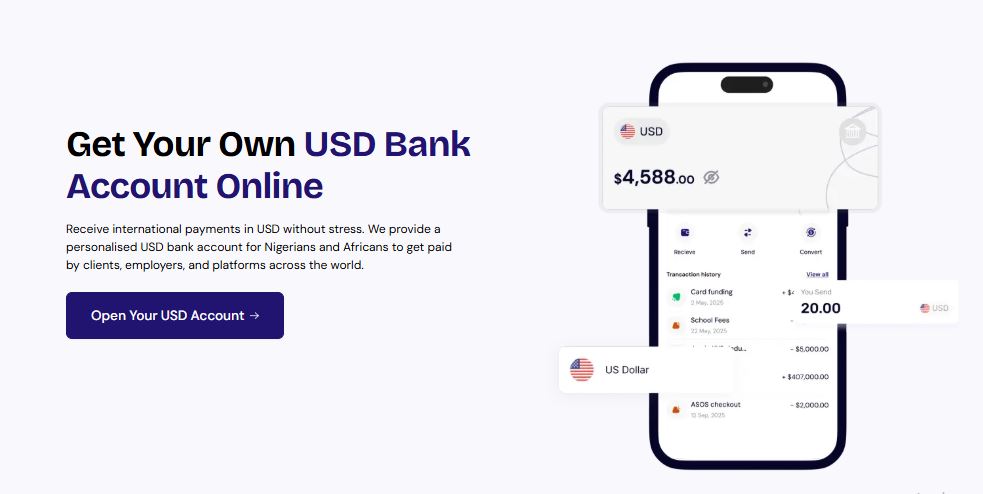
International SWIFT transfers can take several business days and incur fees from sending, receiving, and intermediary banks. Pouchers offers an alternative for Nigerians receiving USD payments from US clients and employers through domestic payment networks. Here is how Pouchers stands apart.
1. Pouchers Offers Multiple Money Transfer Options
With a USD bank account that provides account number and routing number, Pouchers users can receive eligible payments through FedNow or ACH. FedNow supports near-instant transfers, while ACH payments typically take 1–3 business days to arrive. These options can help you avoid the delays and intermediary bank deductions associated with SWIFT transfers.
2. Pouchers Offers Competitive Transfer Fees
Once the funds arrive, you can hold your dollars in Pouchers or convert them to naira at the live exchange rate displayed in the app. Pouchers charges a 0.7% fee on eligible ACH and FedNow deposits, with a minimum of $2 and a maximum of $10. It does not charge a separate currency conversion fee.
3. Other Supported Features
Pouchers further offers stablecoin wallets that support USDT and USDC and virtual dollar cards for international payments. You can receive eligible dollar payments, hold funds in USD or stablecoins, and use the app to manage your funds across different currencies.
Wire Transfer vs. ACH vs. FedNow: Side-by-Side
| Feature | SWIFT wire transfer | ACH | FedNow |
| How it works | Moves money between banks internationally | Transfers money between US bank accounts | Transfers money between US bank accounts instantly |
| Typical speed | 1–5 business days | 1–3 business days | Within seconds |
| Fees | $25 – $50 lifting fee | 0.7% (minimum $2, maximum $10) | 0.7% (minimum $2, maximum $10) |
| Other possible fees | Receiving, intermediary bank and currency conversion fees | Sender or payment provider fees may apply | Sender or payment provider fees may apply |
| Best for | International transfers between banks | Regular payments from US clients or employers | Eligible payments that need to arrive quickly |
If your client or payment platform supports ACH or FedNow, you can easily receive USD through Pouchers without international SWIFT wire.
Frequently Asked Questions
1. How long does an international wire transfer take to Nigeria?
An international wire transfer to Nigeria typically takes 1–5 business days, although some arrive within 2–3 days. The exact timing depends on the banks involved, intermediary banks, currency conversion, and compliance checks.
2. Are wire transfers instant?
No. International wire transfers usually take 1–5 business days to reach the recipient.
3. Why is my international wire transfer taking so long?
Delays can result from incorrect bank details, security checks, intermediary bank processing, currency conversion, weekends, or public holidays. Contact your bank or ask the sender to check with their bank if the expected arrival time has passed.
4. What is the fastest way to receive money internationally in Nigeria?
Pouchers offers the fastest way to receive international payments as it supports FedNow deposits that arrive within seconds, while ACH deposits typically take 1–3 business days.
5. Does currency conversion slow down a wire transfer?
It can. Converting currencies may require additional processing or compliance checks, which can delay a transfer. The exchange rate can also affect how much money the recipient ultimately receives.
Conclusion
International wire transfers typically take 1–5 business days, and intermediary banks, currency conversion, or incorrect payment details can cause further delays. If you regularly receive USD payments from US clients or employers, Pouchers offers an alternative through ACH and FedNow.
You can receive eligible payments through domestic US payment networks, avoid SWIFT correspondent bank deductions, and convert your dollars to naira at the rate displayed in the app.
Sources: