








A free virtual dollar card isn’t necessarily the cheapest one. You could pay nothing to create it and still lose money every time you fund it, make a payment, or hold your balance.
In this guide, we compare the cheapest virtual dollar cards available in Nigeria. We didn’t just rank them by card creation fees and call it a day; we considered their charges over time to see if these cards are genuinely cheap.
How We Ranked These Virtual Dollar Cards
Cheapest in this case means the card with the total cost of ownership and use, not simply the lowest creation sticker price.
We compared the seven virtual dollar cards using these criteria:
- Card creation fee: The one-time cost of getting the card.
- Monthly or inactivity fees: Recurring charges for keeping the card active or unused.
- Funding fees: Charges for adding money to the card.
- Transaction fees: Fees applied whenever you make a payment.
- Cross-border and declined-payment fees: Additional charges for payments made to merchants outside the US, even when the payment is in USD, and fees for transactions that are declined.
- Card features: The available network, such as Visa and Mastercard, and support for services such as Apple Pay and Google Pay.
Later in this article, we breakdown the total cost for each card under the same conditions over three months to truly identify the cheapest virtual dollar card in Nigeria.
The 7 Cheapest Virtual Dollar Cards in Nigeria
| Card | Creation fee | Funding fee | FX fee | Monthly fee |
| Pouchers | $2 Standard; $5 Premium | Free | 2.5% + $0.50 | None |
| Eversend | $0.99 monthly plan; $2.99 one-time plan | Free | 3.5% + $0.50 | $0.99 on monthly plan |
| Bitnob | $2 | $1 up to $100; 1% above $100 | 3% + $0.50 | Not listed |
| Cardtonic | Regular: $1.50; Platinum: $5 | 2% | 2.5% + $0.50 | Not listed |
| Raenest | $3 | Free | 2% + $0.40 | None |
| Cleva Classic | $3 | Free | 2% + $0.80 | Not listed |
| Chipper Cash | $5 | Free to add funds; 1% on external funds received | Not listed | $1 |
1. Pouchers: Cheapest Overall for Regular Use
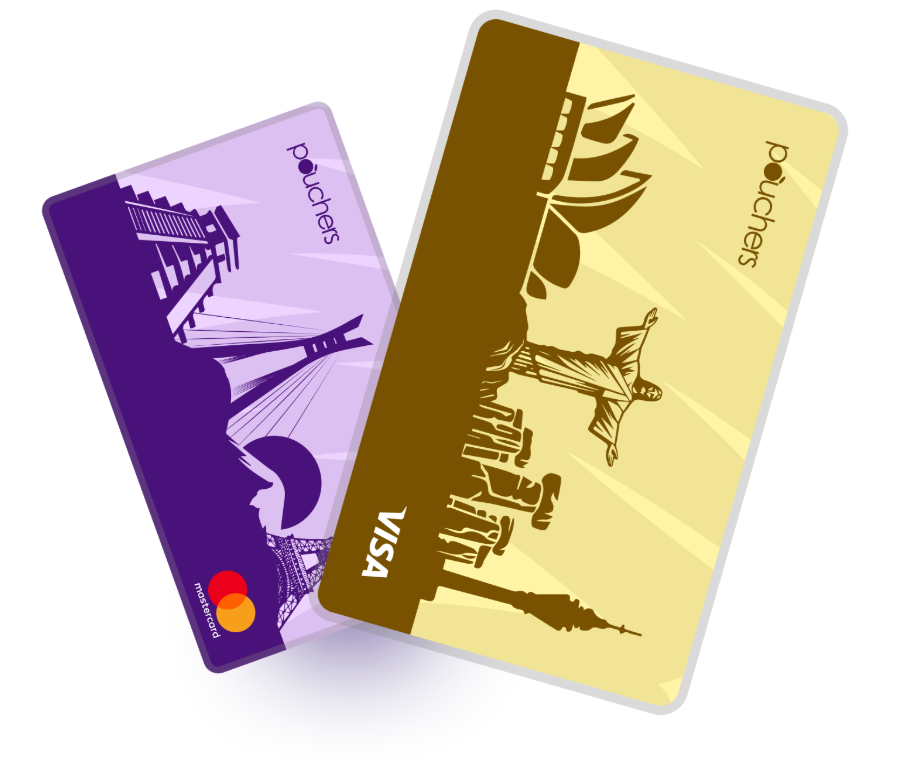
Pouchers is a fintech platform that helps Nigerians receive, hold, and spend money in foreign currencies. There are Pouchers virtual dollar cards for international online payments, with two options: Standard and Premium.
Both cards have one-time creation fees and no monthly maintenance charges. Standard costs $2, while Premium costs $5. You can choose between a Visa and Mastercard virtual card, depending on your preference.
| Fee or limit | Details |
| Card creation | $2 Standard; $5 Premium (one-time) |
| Card funding and withdrawal to naira wallet | Free |
| Monthly maintenance | None |
| Cross-border transactions | 2.5% + $0.50 |
| Declined payments due to insufficient funds | $0.50; no fee when the card is frozen |
| Maximum spend per transaction | $10,000 |
| Spending limit | $50,000 per card (Daily); $400,000 per card (Monthly) |
Pros
- No funding or monthly maintenance fees
- Visa and Mastercard options
- Premium supports Apple Pay, Google Pay, and in-store payments
- High spending limits
Cons
- Requires an upfront creation fee
- $0.50 fee for declines caused by insufficient funds
- 2.5% + $0.50 fee on eligible cross-border transactions
Why it ranks first: Pouchers ranks first because of its low one-time creation fees, free funding, and lack of monthly maintenance. Additionally, its overall cost over the three months is the cheapest among the other cards.
2. Eversend: Best for Occasional USD Payments
Eversend offers a virtual USD Visa card with two payment plans: a monthly plan or a one-time plan with no recurring maintenance charges.
| Fee or limit | Details |
| Card creation | $0.99 on the monthly plan (covers the first month) or $2.99 on the one-time plan |
| Monthly maintenance | $0.99 per active or frozen card on the monthly plan; none on the one-time plan |
| Funding and withdrawals to your wallet | Free |
| Non-USD or payments settled outside the US | 3.5% + $0.50 |
| Declined payments due to insufficient funds | $0.40 per attempt |
| Card termination | After three consecutive insufficient-funds declines |
Pros
- Choice of monthly or one-time payment plans
- Free funding and wallet withdrawals
- One-time plan avoids recurring maintenance fees
Cons
- Monthly plan attracts recurring charges
- Cross-border fees can increase the cost of international payments
- Three consecutive insufficient-funds declines result in card termination
Why it ranks second: Eversend’s one-time plan suits occasional users who want to avoid monthly fees. But its 3.5% + $0.50 cross-border charge can easily add up for frequent international payments.
3. Bitnob: Best for Users Who Fund with Crypto
Bitnob is a crypto-focused financial app that offers a virtual USD Visa card which users can top up using their Bitnob wallet. The wallet gets funded with naira or supported cryptocurrencies
| Fee or limit | Details |
| Card creation | $2 (one-time) |
| Card funding | $1 for top-ups up to $100; 1% for top-ups above $100 |
| Monthly maintenance | No monthly maintenance fee listed |
| Cross-border transactions | 3% + $0.50 |
| Minimum top-up amount | $3 |
| Maximum top-up amount | $5,000 per transaction |
| Maximum card balance | $50,000 |
Pros
- Supports funding through naira and supported cryptocurrencies
- No monthly maintenance fee
- Useful for people who already hold crypto in Bitnob
Cons
- Every top-up attracts a fee
- Cross-border charges can increase the cost of frequent international payments.
Why it ranks third: Bitnob is useful for people who prefer funding their cards with cryptocurrency. However, its top-up charges and cross-border fees can increase the cost of using the card, especially for frequent international payments.
4. Cardtonic: Low Creation Fee, Higher Funding Costs
Cardtonic offers Regular and Platinum virtual cards on Visa and Mastercard networks. Its Regular card has a relatively low creation fee, but the 2% funding charge and withdrawal costs can make frequent use quite costly.
| Fee or limit | Details |
| Card creation | $1.50 (Regular); $5 (Platinum) |
| Funding | 2% per top-up |
| Withdrawal | $1 per withdrawal (minimum withdrawal: $2) |
| Cross-border transactions | 2.5% + $0.50 |
| Declined payments | $0.50 when the card has insufficient funds or is inactive |
| Minimum funding | $5; no stated maximum |
| Minimum balance | $1 must remain on the card after a withdrawal |
Pros
- Relatively low creation fee for the Regular card
- Visa and Mastercard options
- Choice of Regular and Platinum cards
Cons
- The 2% funding fee applies to every top-up
- Withdrawals and eligible declined payments attract additional charges
- Repeated declines can lead to card termination, with unpaid decline fees deducted from your next wallet funding.
Why it ranks fourth: Cardtonic’s low card creation fee is offset by its 2% funding charge and additional withdrawal and transaction costs.
5. Raenest (Formerly Geegpay): Best for Occasional Card Use
Raenest, formerly known as Geegpay, is a multi-currency financial platform that offers a virtual USD Visa card. It has a one-time creation fee and no funding or maintenance charges, but every successful payment attracts a processing fee.
| Fee or limit | Details |
| Card creation | $3 (one-time) |
| Funding | Free |
| Monthly maintenance | Free |
| Successful transactions | $0.70 per payment |
| International merchant processing | 2% + $0.40 on purchases or refunds from non-US websites |
| Insufficient-balance declines | $0.40 per attempt |
| Chargebacks or disputes | $50 |
| Currency conversion | Applies when a purchase is funded from a non-USD wallet |
Pros
- No funding or monthly maintenance fees
- Accepted wherever Visa is supported
- Access to Raenest’s other multi-currency account features
Cons
- $0.70 fee on every successful payment
- Additional charges on purchases and refunds from non-US websites
- Available only on the Visa network
- High $50 chargeback/dispute processing fee
Why it ranks fifth: Raenest has no funding or monthly maintenance fees, but its $0.70 charge on every successful payment makes frequent spending more expensive.
6. Cleva: Best for Freelancers Already Receiving USD
Cleva offers a USD account and a Classic virtual dollar card. The card uses the money in your Cleva wallet directly, so you don’t need to fund it separately. This makes it convenient for freelancers who already receive their dollar payments through Cleva.
| Fee or limit | Details |
| Card creation | $3 (one-time) |
| Transaction fee | $0.80 per card transaction |
| Funding | Free (the card is linked directly to your Cleva wallet) |
| Declined transactions | Free, although repeated insufficient-funds declines may result in card termination |
| International transactions | 2% + $0.80 on non-US websites |
| Dispute fee | $50 |
Pros
- Spend directly from your USD wallet without separate top-ups
- No card funding fee
- No declined-payment fee
Cons
- $0.80 charged for every card transaction
- Non-US website payments attract an additional 2% + $0.80
- A $50 dispute fee applies when you raise a card dispute
Why it ranks sixth: Cleva’s Classic card removes the need for separate top-ups, but its $0.80 transaction fee makes frequent spending more expensive than the top 5.
7. Chipper Cash: Most Expensive for Regular Use
Chipper Cash offers a prepaid, reloadable virtual Visa card for international online payments. You can fund it directly from your Chipper wallet, but its monthly maintenance and per-transaction fees make it costly for regular use.
| Fee or limit | Details |
| Card creation | $5 (one-time) |
| Monthly maintenance | $1 per active card, charged on the 28th of each month |
| Successful USD transactions | $0.90 per payment |
| Funds received from external sources | 1% |
| Declined transactions | ₦250 per failed payment due to insufficient funds |
| Adding and withdrawing funds | Free |
Pros
- No fees for adding or withdrawing funds
- Convenient for existing Chipper Cash users
- Supports international online payments on eligible merchant platforms
Cons
- $1 monthly maintenance fee applies to active cards, even when unused
- $0.90 charge on every successful USD transaction
- 1% fee on funds received from external sources
- ₦250 charge for declined payments due to insufficient funds
Why it ranks seventh: Chipper Cash ranks seventh because its $1 monthly maintenance fee and $0.90 charge on every successful transaction make it the most expensive option in our three-month comparison.
How Much Does a $1,000 Virtual Dollar Card Really Cost After 3 Months?
To see how the fees add up, let’s assume you start with $1,000 and make 10 transactions of $20 every month. That’s $200 in monthly spending and $600 over three months, leaving $400 before card fees.
Note: We assume the full $1,000 is loaded once, there are no declined transactions, and that all transactions are regular USD payments.
| Virtual card | Creation fee | Funding fee | Monthly fees | Transaction fees (30 payments) | Total fees | Balance left (Highest to Lowest) |
| Pouchers Standard | $2 | $0 | $0 | $0 | $2 (excluding transaction fee) | $398 |
| Eversend monthly plan | $0.99 | $0 | $2.97 | $0 | $2.97 | $397.03 |
| Bitnob | $2 | $10 | $0 | Not listed | $12 (excluding transaction fee) | $388 |
| Cardtonic Platinum | $5 | $20 | Not listed | Not listed | $25 (excluding monthly and transaction fees) | $375 |
| Raenest | $3 | $0 | $0 | $21 | $24 | $376 |
| Cleva Classic | $3 | $0 | $0 | $24 | $27 | $373 |
| Chipper Cash | $5 | $10 | $3 | $27 | $45 | $355 |
Funding fees are calculated on the initial $1,000 load. Chipper’s external funding fee is 1%, Cardtonic’s is 2%, and Bitnob’s is 1% for a top-up above $100.
How to Get a Pouchers Virtual Dollar Card
The first step to having a Pouchers virtual dollar card is creating an account and completing the required verification. Once your account is set up, choose between the Standard and Premium card, and create your virtual card for international payments.
The process is straightforward, but if you need help with the requirements or creating the card, see our step-by-step guide: How to Get a Virtual Dollar Card.
Final Verdict: Which Is the Cheapest Virtual Dollar Card in Nigeria?
A low creation fee can be misleading. We can confirm this after comparing seven virtual dollar cards using the same three-month scenario, across their creation, funding, maintenance, and transaction fees. Pouchers came out cheapest overall, with a total cost of $2 for the period. Its Standard card has a one-time creation fee, free funding, and no monthly maintenance charge.
If you want a virtual dollar card with low upfront and ongoing costs, get your Pouchers virtual dollar card today.
[Download the Pouchers app to create your Pouchers virtual dollar card]
Frequently Asked Questions
1. What is the cheapest virtual dollar card in Nigeria?
Pouchers is the cheapest overall in our comparison, with a $2 one-time creation fee for its Standard card and no monthly maintenance fee.
2. Is there a virtual dollar card with no monthly fee?
Yes. Pouchers, Bitnob, and Raenest do not charge monthly maintenance fees.
3. Is a free virtual dollar card really free?
Not necessarily. A card with no creation fee may still charge funding, transaction, maintenance, or foreign currency fees.
4. Which virtual dollar card has no funding fee?
Pouchers virtual dollar card has no funding fee. Top up and make payments for free.
5. Can I use a cheap virtual dollar card for Netflix, ChatGPT, and ads?
Yes, provided the card supports the merchant’s payment requirements and has enough funds.
6. Which cheap virtual dollar card works with Apple Pay?
Pouchers Premium supports Apple Pay and Google Pay. Check the provider’s current eligibility requirements and supported devices before creating your card.
Sources: