








Many Nigerians realize too late that a regular bank account isn’t always enough to receive international payments. When a sender asks for an IBAN number and your account doesn’t have one, your payment can be delayed because the funds can’t be routed to a Nigerian account.
Nigerian banks don’t issue an IBAN number for regular naira accounts, so creating a domiciliary account may seem like the next option, but it often means extra paperwork and branch visits, all just to receive money you’ve already earned.
However, payment apps like Pouchers give you a foreign account number with an IBAN number, without the usual barriers of opening a foreign bank account. This guide explains what an IBAN is and how to get yours easily.
What is IBAN Number?
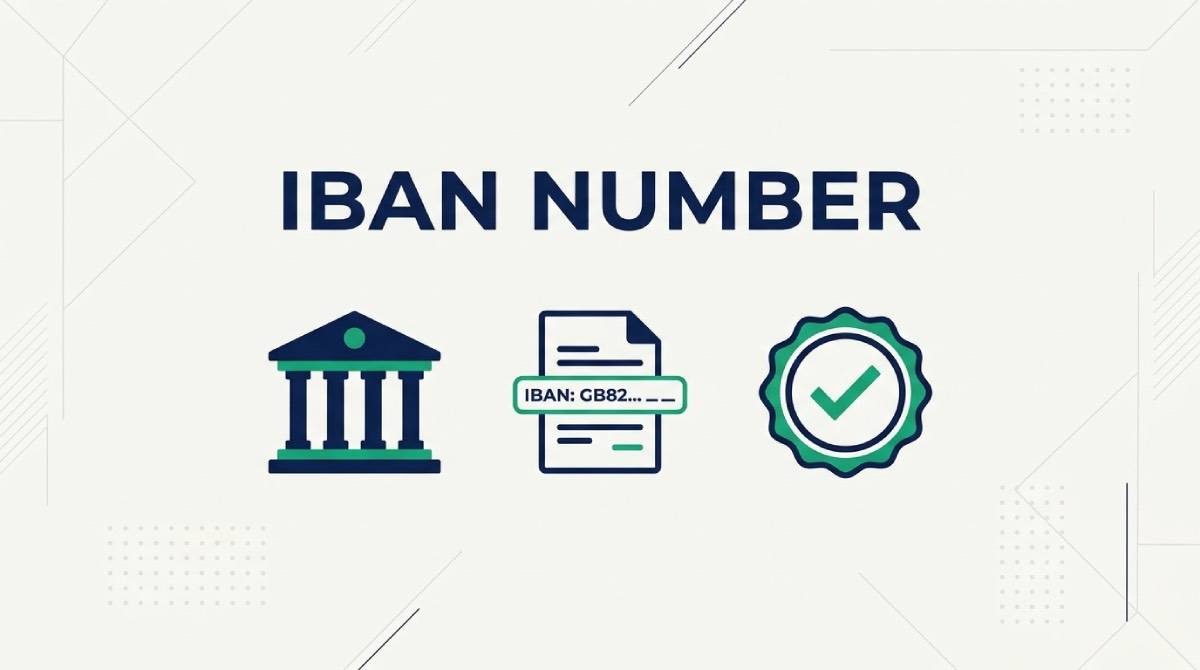
An IBAN (International Bank Account Number) is a standardized code that identifies a particular bank account for cross-border payments. It is widely used in Europe and is especially important for euro payments within the Single Euro Payments Area (SEPA).
For Nigerians, an IBAN matters mainly when sending or receiving money from countries that use it, especially in Europe. Nigeria itself does not use IBAN numbers for local transfers; instead, it uses NUBAN account numbers domestically and SWIFT/BIC codes for international payments.
A SWIFT/BIC code identifies the bank, while an IBAN identifies the exact account that should receive the money. IBAN number also includes check digits that help detect formatting errors before a payment is processed.
Structure of an IBAN
IBAN number vary by country but generally include:
- Country code (2 letters): Identifies the country where the account is held.
- Check digits (2 numbers): Help prevent errors in the account details.
- BBAN (Basic Bank Account Number): Includes the bank code and the customer’s account number.
Example of a UK IBAN number: GB29NWBK60161331926819
- GB = Country code (United Kingdom)
- 29 = Check digits
- NWBK = Bank code (NatWest)
- 60161331926819 = Account number
IBAN vs SWIFT vs NUBAN
These identifiers serve different purposes, and using the wrong one can delay or cause a payment to fail.
| Identifier | What it identifies | Structure | Where it is used |
| IBAN | A specific bank account | Up to 34 characters, including country code and check digits | Mainly Europe, the Middle East, and parts of Africa |
| SWIFT/BIC | A bank or financial institution | 8–11 characters | Global international transfers |
| NUBAN | A Nigerian bank account | 10 digits | Domestic naira transfers in Nigeria |
| BVN | A bank customer’s identity | 11 digits | Identity verification across Nigerian banks |
Why Nigerian Bank Accounts Do Not Have IBAN Numbers
Nigerian bank accounts do not have IBAN numbers because Nigeria is not part of the International Bank Account Number (IBAN) system. Instead, Nigerian banks use the Nigeria Inter-Bank Settlement System (NIBSS)-standardised 10-digit NUBAN for local transfers and the SWIFT network for international payments.
As a result, Nigerian banks do not issue IBAN numbers, even for foreign-currency domiciliary accounts.
This can make receiving payments from Europe or the UK more complicated, especially when a sender requires an IBAN number for euros or UK bank details for pounds.
While Nigerian banks can receive international transfers through SWIFT, they generally do not provide the local EUR or GBP account details needed for domestic-style transfers in those regions.
Your Two Options
- Ask the sender to use an international SWIFT transfer to your Nigerian bank, which can be slower and may involve more fees.
- Open a foreign-currency account that provides the correct EUR or GBP receiving details.
For freelancers, remote workers, exporters, and families receiving regular support from Europe or the UK, a dedicated EUR or GBP account is usually the more practical option.
How Pouchers Helps You With Your IBAN Number

Pouchers offers foreign accounts that allow eligible Nigerian users to receive, hold, and manage international payments in the currency they were sent. Its EUR and GBP accounts are particularly useful for people paid by European clients, UK employers, international platforms, or family members abroad.
1. Get a Euro IBAN for SEPA Payments
When you activate a EUR bank account, Pouchers provides a European IBAN number for Eurozone payments. You can share it with a sender in the SEPA zone, such as Switzerland, the UK, Hungary Albania, etc. The Pouchers-provided IBAN number enables them to send euros through the normal European payment system rather than a costly international wire.
2. Get UK Account Details for GBP Payments
When you activate a GBP bank account, Pouchers provides a UK sort code, account number, and IBAN number. This lets you receive pounds from UK-based employers, clients, businesses, or your own UK bank account.
Pouchers also helps you to hold EUR and GBP balances in one multicurrency wallet alongside naira and other supported currencies.
Once your EUR or GBP payment arrives, you can convert it to another supported currency at transparent in-app rates, then use the funds for transfers, bill payments, subscriptions, or funding your Pouchers virtual card.
How to Get Your IBAN Number on Pouchers
Step 1: Sign Up and Complete KYC
Download the Pouchers app, then create an account or log in if you already have an existing account. Verify your identity with your BVN to unlock foreign-currency accounts.
Step 2: Activate Your Account
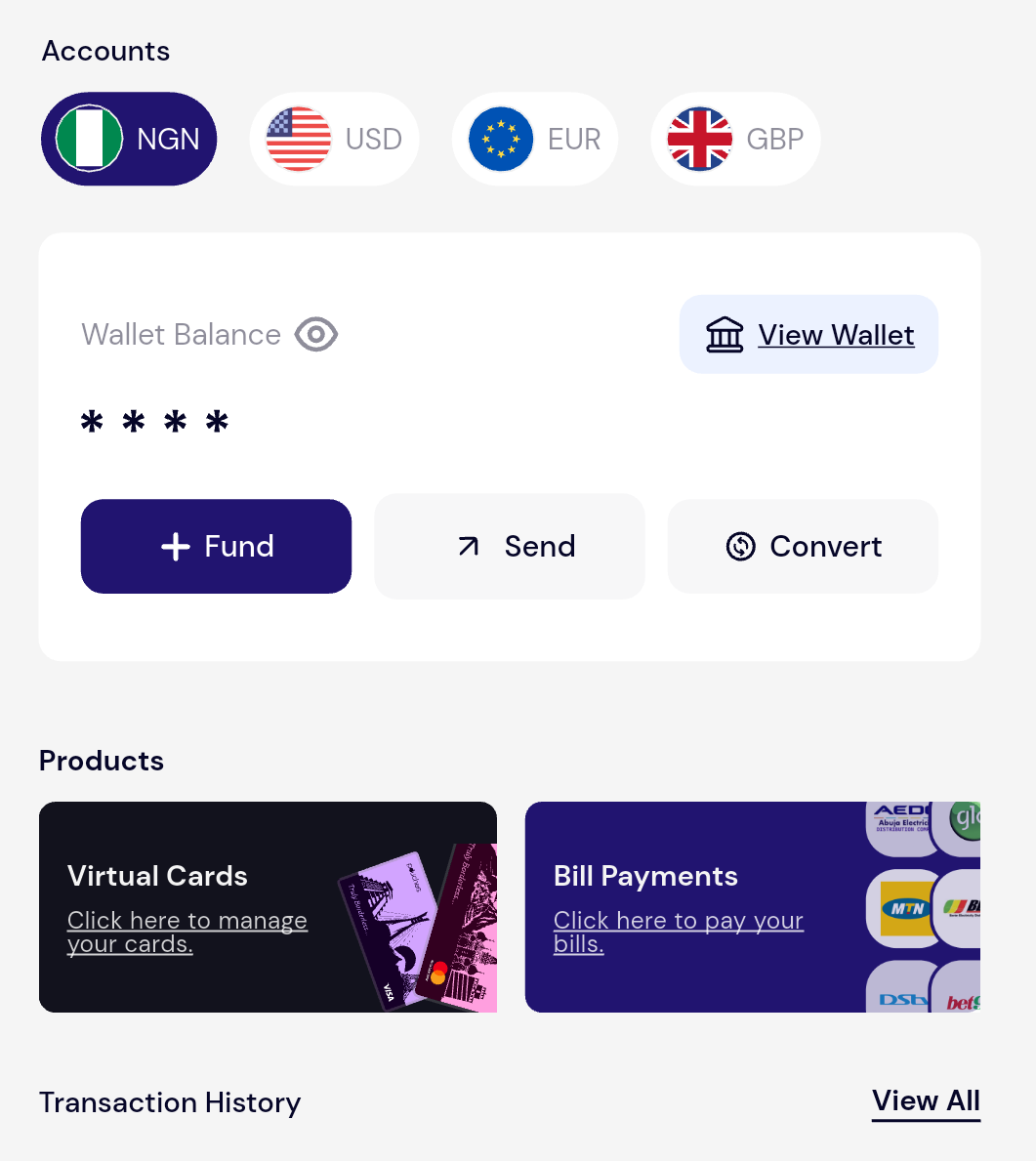
On the homepage, select the EUR or GBP account you want, then tap Activate. Review and accept the terms and conditions to continue.
Step 3: Submit Your Details
Enter your personal information and upload a valid government-issued ID. Enter your source of funds, occupation, employment status, account purpose, and expected usage. Accept the personal-use declaration and submit.
Step 4: View Your Account Details
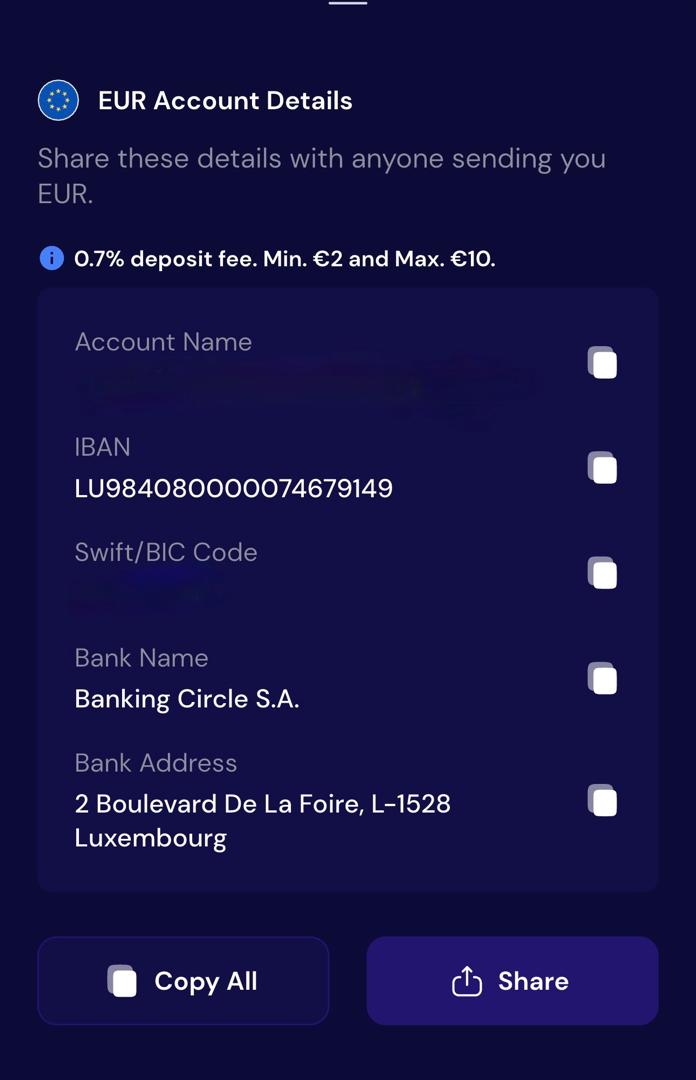
Once approved, open your wallet to see your details: a Euro IBAN for EUR or a sort code, account number, and IBAN number for GBP.
You’re all done.
How to Find Your IBAN Number Safely on Other Foreign Accounts
If you already have a foreign-currency account or domiciliary account, log into the account and find your IBAN number under account details or international details. You can also locate your IBAN on your downloaded or printed account statement. Or simply contact your account officer to get the details.
Do not use any online IBAN number generators to create an IBAN. A generated number may look valid, but it does not guarantee that the account exists or belongs to you. Always use the number issued directly by your bank or your account officer.
Common Reasons EUR and GBP Payments Fail
Your international payment requiring an IBAN number can fail due to the conditions below:
- When your full legal name does not match the name on the account.
- When the sender mistakenly enters the wrong Euro IBAN number for EUR or the correct UK sort code and account number for GBP.
- If the sender is not sending the currency your account is designed to receive.
- When the required BIC/SWIFT information is not entered correctly.
- When the payment does not comply with the provider’s accepted payment purposes.
GBP transactions on Pouchers are intended for legitimate payments such as salaries, freelance income, invoices, and business settlements. Bear in mind that payments linked to crypto, P2P transfers, betting, or forex trading may be declined or reviewed.
Frequently Asked Questions
1. What is the meaning of an IBAN number in Nigeria?
In Nigeria, an IBAN number means an International Bank Account Number, a standardized code used to identify a bank account for international payments, especially in countries and regions that use IBAN numbers, such as much of Europe.
2. Can I use my Nigerian NUBAN instead of an IBAN number?
No. A NUBAN is designed for Nigerian domestic transfers, while an IBAN number is required for many European and SEPA payments. To receive EUR through SEPA or GBP through UK payment rails, you need the appropriate foreign-account details.
3. Can I receive both EUR and GBP on Pouchers?
Yes. Pouchers allows you to activate separate EUR and GBP foreign accounts. Your EUR account provides a European IBAN, while your GBP account provides UK sort code, account number, and IBAN number.
4. Can I convert EUR or GBP to naira on Pouchers?
Yes. After receiving EUR or GBP, you can convert your balance to naira, at the rates shown in the app.
5. What payment methods can send money to my Pouchers GBP account?
A sender can use your UK sort code and account number to send GBP through UK payment rails such as Faster Payments. Pouchers will accept any payment coming from your own UK bank account or a UK-registered business.
6. Is a Pouchers IBAN safe to share?
Yes, but share it only with people or businesses you expect to pay you. Your IBAN number identifies where money should be received; it should be kept accurate and used only for legitimate payments.
Conclusion
Nigerian bank accounts use NUBAN locally and SWIFT for international transfers, but they do not provide IBAN number. That makes it harder to receive euros through SEPA or pounds through UK payment systems.
Pouchers closes that gap by giving users EUR and GBP foreign accounts: a Euro IBAN for EUR payments and UK account details with an IBAN number for GBP payments. Once activated, you can receive international payments, hold your balance in one multicurrency wallet, and convert funds when you need to.