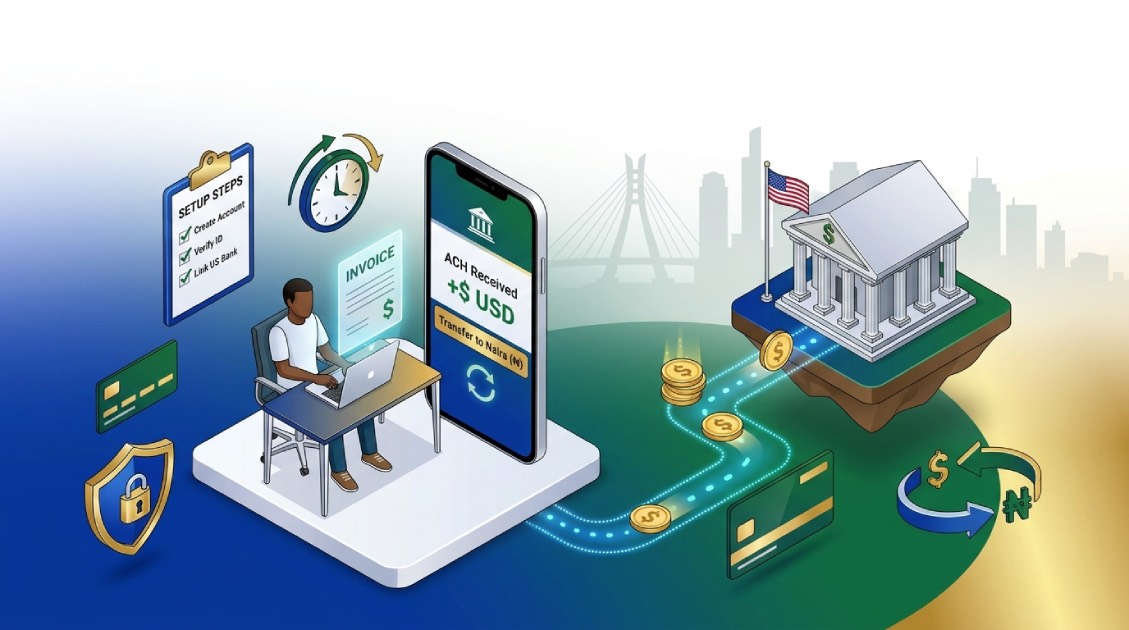









You’re about to get paid by a US client, and the payment form asks for something you’ve never been asked for: a routing number. If you’re in Nigeria, where banks use account numbers, sort codes, and SWIFT codes, this can be confusing. Enter it wrong, and your payment could be delayed, rejected, or sent to the wrong place.
A routing number is a nine-digit code that identifies a specific US bank or financial institution. It tells payment systems like ACH where to send your money, whether you’re receiving a salary, a freelance payment, or a direct deposit. Without it, a US bank transfer can’t reach your account.
In this guide, you’ll learn what a routing number is, how it differs from an account number, and how to find yours quickly.
We’ll also explain what Nigerian freelancers and remote workers need to know when receiving USD payments, so you can share your details with confidence.
What Is a Routing Number?
A routing number, also called an ABA routing transit number (RTN), is a unique nine-digit number assigned to banks and credit unions in the United States. Think of it as the bank’s address in the national payment system. When money moves between banks, the routing number tells the system which institution should receive it.
The American Bankers Association (ABA) created the system in 1910 to sort paper checks. Today, the same nine-digit code directs direct deposits, bill payments, and bank transfers across the US.
What Routing Numbers Are Used For
Routing numbers route transactions between US financial institutions. You will need one for:
- Receiving salary, wage, or contract payments: US-based employers, corporate payroll systems, and freelance clients require your bank’s routing number to establish direct deposits for recurring compensation. Providing accurate routing details ensures that automated payroll clears without processing delays or rejection fees.
- Withdrawing funds from digital service platforms: Popular marketplace platforms like Upwork, Fiverr, and Deel use the “Direct to U.S. Bank” withdrawal method, which mandates pairing an ACH routing number with your account number. Entering this information properly allows international contractors to seamlessly move earned platform balances directly into accessible USD accounts.
- Executing domestic wire transfers: Clients or commercial entities sending large, time-sensitive settlements within the US rely on dedicated wire routing numbers to direct payments across the Federal Reserve’s Fedwire network. Using the correct wire routing transit number guarantees immediate real-time settlement and prevents wire misrouting.
- Setting up automated bill payments: Utility companies, SaaS subscription services, and US vendors pull scheduled payments using the Automated Clearing House (ACH) network via your routing and account number pair. Authorising these debits prevents service interruptions and simplifies recurring obligation management.
- Linking financial accounts and mobile payment apps: Fintech applications, investment platforms, and payment processors request your routing details during setup to establish secure ACH linkages between accounts. Verifying these credentials allows smooth transfer of funds across external platforms.
Routing Number vs Account Number
Transactions require both numbers, but they serve different functions. The routing number identifies the financial institution, while the account number identifies your individual account.
| Routing number | Account number | |
| What it identifies | The bank or credit union | Your specific account at that bank |
| Where it is used | Direct deposits, ACH transfers, domestic wires, bill payments | The same transactions, always paired with the routing number |
| Length | Always 9 digits | Usually 8 to 17 digits, depending on the bank |
| Public or private | Public; anyone can look it up online | Private; share it only with people who need to pay you |
Multiple accounts at the same bank share a routing number, but account numbers are unique to each account holder. Because routing numbers are public information, banks display them openly, but account numbers should be kept secure.
ACH vs Wire Routing Numbers: Which One Do You Need?
US transfers rely on two main networks. ACH (Automated Clearing House) processes transfers in batches, making it cost-effective for routine payments. Wire transfers clear individually through the Federal Reserve’s Fedwire network, providing faster settlement for urgent or high-value transactions.
Some institutions use a single routing number for both transfer types, while larger banks often maintain separate numbers for ACH and wire transactions:
| ACH routing number | Wire routing number | |
| Used for | Salaries, freelance payouts, platform withdrawals, bill payments | Large or urgent one-off payments within the US |
| Speed | 1 to 3 business days | Usually the same business day |
| Typical cost to receive | Often free at US banks. On Pouchers, 0.7% (minimum $2, maximum $12) | Many banks charge a flat incoming wire fee. Check your provider’s fee page |
| Who asks for it | Employers, payroll services, Upwork, US clients paying an invoice | Clients sending big payments, escrow services, some agencies |
When setting up payments, select the correct routing number based on the transfer method. Provide an ACH routing number for direct deposits and payroll, and a wire routing number for incoming wire transfers.
How to Find Your Routing Number
If you have an existing US bank account, you can locate your routing number using several standard methods.
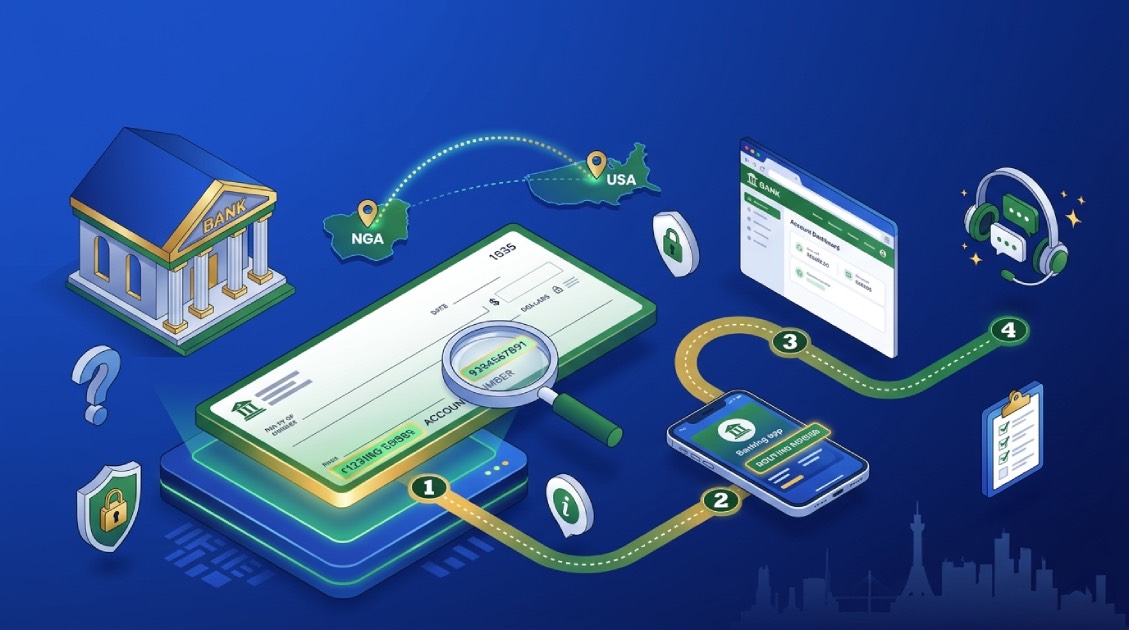
1. In your banking app, online banking or statement
- Mobile banking app: Open your app, tap the target account, and look under Account details, Account info, or Direct deposit. Your routing and account numbers are displayed side-by-side, usually with a quick-copy option.
- Online banking portal: Log in to your account online, navigate to the account summary, and view the account details section.
- Bank statements: Check your monthly paper or PDF statements, where routing numbers are frequently listed.
Official lookups: Verify any routing number using the official ABA routing number lookup or the Federal Reserve’s E-Payments Routing Directory.
2. On a US cheque
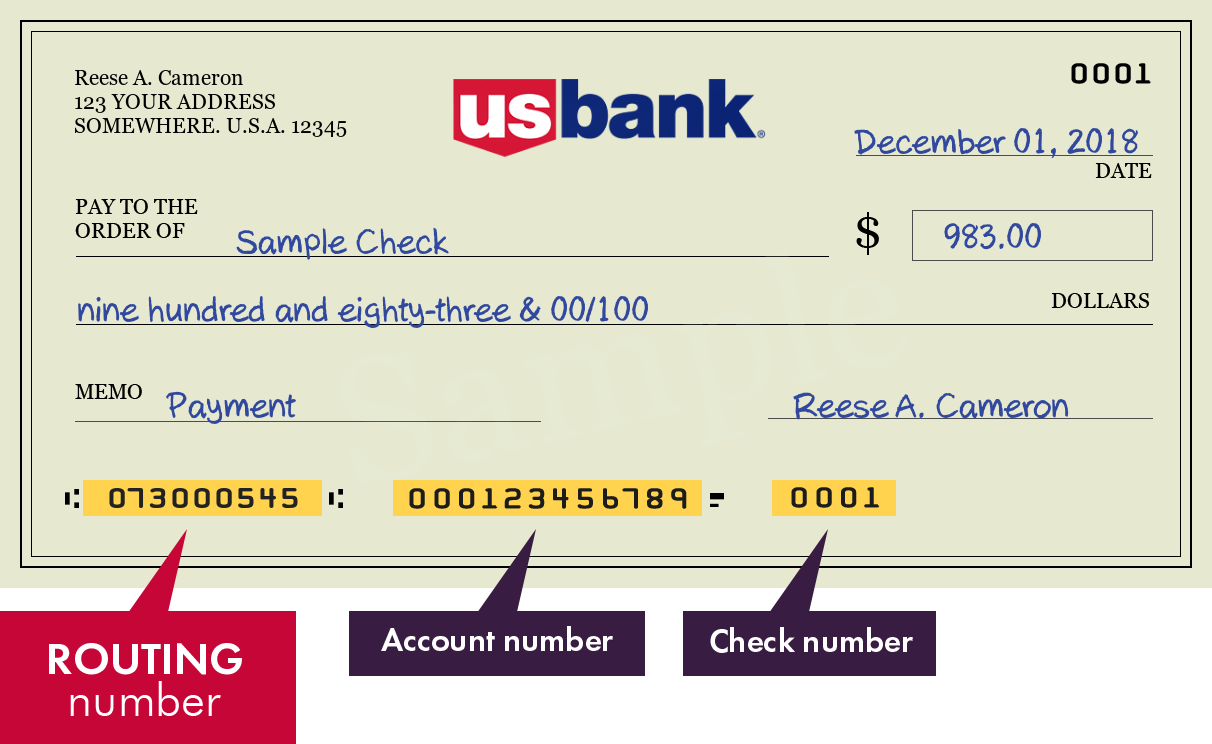
If you have a US chequebook, look at the bottom of any cheque. You’ll see three groups of numbers:
Left: the nine-digit routing number, often starting with 0, 1, 2 or 3.
Middle: your account number.
Right: the cheque number.
The routing number printed on a check applies to ACH transfers and check processing, but it may differ from the bank’s wire routing number. Confirm wire details directly in your banking app before initiating wire transfers.
Do Nigerian Banks Have Routing Numbers?
No. Routing numbers are exclusive to the US financial system, so banks in Nigeria do not issue them.
Nigerian banks use the 10-digit NUBAN system for account numbers and rely on bank codes and sort codes for domestic transfers. Although some Nigerian sort codes contain nine digits, US payroll and billing platforms cannot process them.
Domiciliary accounts in Nigeria receive foreign currency through SWIFT transfers rather than US routing numbers. This works for international wires, but it is not compatible with US platforms requiring ACH routing details.
To receive ACH or domestic US transfers, you need a US account structure that includes dedicated US routing and account numbers.
How to Get a US Routing Number in Nigeria with Pouchers
A Pouchers USD account provides US account details, including an ACH routing number and account number, managed directly from your phone.
How to get your USD account details
Step 1: Download the Pouchers app from Google Play or the App Store.
Step 2: Sign up and create your Pouchers account.
Step 3: Navigate to your USD wallet, select Fiat, and tap Activate Wallet.
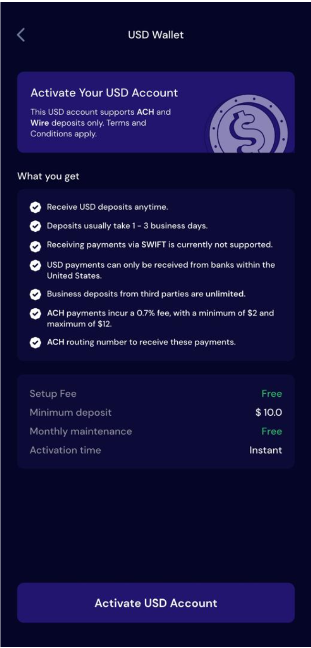
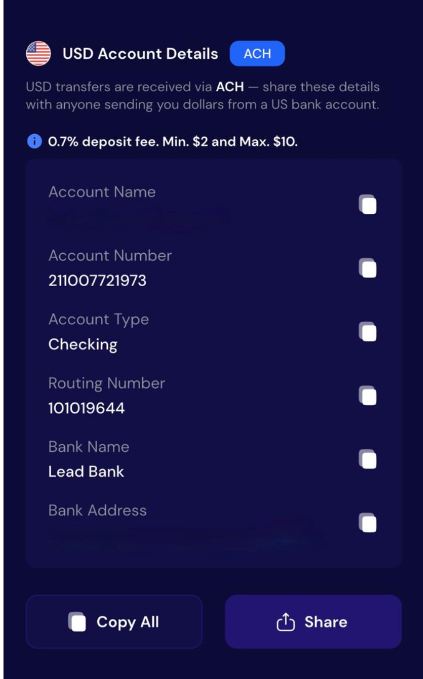
Step 4: View your USD account details to copy your routing number, account number, bank name, account name, and bank address.
Routing Number Mistakes That Delay Your Payment
To avoid transaction delays, ensure you avoid these common issues:
1. Transposing routing and account numbers
Swapping your nine-digit routing number with your account number is a frequent error when filling out payout forms. Entering these digits in the wrong fields causes the receiving bank to reject the transaction immediately, creating unnecessary delays.
Solution: Double-check that the nine-digit routing number is entered specifically into the designated routing field and your account number is entered into the account number field before submitting.
2. Attempting SWIFT transfers to ACH accounts
Sending an international SWIFT wire directly to a domestic ACH routing number will fail. ACH details are designed strictly for domestic US transfers, and foreign wire rails cannot process them directly.
Solution: Ensure your client sends funds using domestic US payment methods (such as ACH direct deposit or local US bank transfer) or use dedicated wire routing details when accepting wire transfers.
3. Mismatched routing numbers
Many US financial institutions use separate routing numbers for ACH transactions and wire transfers. Providing an ACH routing number for an incoming wire transfer (or vice versa) can cause the transfer to get stuck or bounce back.
Solution: Verify which transfer type is being used and provide the corresponding ACH or wire routing number from your bank app.
4. Name mismatches on accounts
Platforms like Upwork, Fiverr, and Deel run strict compliance checks before releasing funds. If the account holder name on your bank account does not match the legal name on your platform profile, payouts will be flagged and placed on hold.
Solution: Ensure the legal name registered on your USD bank account exactly matches the verified identity on your freelancing or remote employment platform.
5. Withdrawing during security holds
Most payment platforms enforce a mandatory security waiting period (usually 3 to 5 days) whenever new bank account details or payout methods are added.
Solution: Add and verify your payment details well in advance of payment dates so that the security hold period expires before you initiate withdrawals.
6. Outdated routing numbers
Bank mergers, acquisitions, or system upgrades can cause financial institutions to update or phase out specific routing numbers, rendering older codes invalid.
Solution: Always confirm your current routing details directly inside your banking app or account settings rather than relying on saved documents or older invoices.
Frequently Asked Questions
1. Can someone outside the US send money to a routing number?
Routing numbers operate exclusively within the US banking network. Senders outside the US must send funds via a US bank account, a platform using US banking rails (such as Upwork), or use SWIFT transfers for international transactions.
2. Why does my routing number show a bank name I don’t recognise?
Fintech platforms work with licensed US partner banks to provide USD account infrastructure. The bank name displayed in your account details reflects the partner financial institution providing the service.
3. Do I need an SSN or a US address to get a US routing number?
No. Opening a Pouchers USD account requires a valid government-issued ID and identity verification. However, third-party platforms may still apply international terms based on your tax residence.
4. Does a routing number ever change?
While infrequent, routing numbers can change due to bank consolidations or operational updates. Always confirm your routing number in your account settings before sharing details.
5. Do I need a routing number to pay online with a virtual dollar card?
No. Virtual card payments rely on a card number, expiration date, and CVV code. Routing numbers are used only for receiving bank transfers into your account.
Conclusion
Routing numbers play a key role in directing bank transfers across the US financial system. Providing the correct nine-digit code ensures transfers clear promptly and without error.
Although Nigerian banks and domestic foreign currency accounts do not provide US routing numbers, a Pouchers USD account offers dedicated US account credentials. This enables international freelancers and remote workers to accept ACH and domestic wire transfers directly.
Download the Pouchers app to get your US routing number today.
Sources
American Bankers Association: Routing Number Lookup
Federal Reserve Financial Services: E-Payments Routing Directory
Federal Reserve Financial Services: E-Payments Routing Directory FAQs
Nacha: ACH Operations Bulletin on keeping routing numbers up to date
Upwork: How to get paid on Upwork