








Cryptocurrencies are known for their price volatility. Assets like Bitcoin and Ethereum can experience significant price fluctuations within a short period, making them less suitable for everyday transactions and value storage.
This challenge led to the creation of stablecoins, a type of cryptocurrency designed to maintain a stable value. One of the most popular stablecoins today is USDC, usually referred to as a digital dollar.
USDC combines the speed and accessibility of cryptocurrency with the price stability of the US Dollar. In this article, you’ll learn what USDC is, how it works, and how you can use USDC for everyday transactions.
What Is USDC?
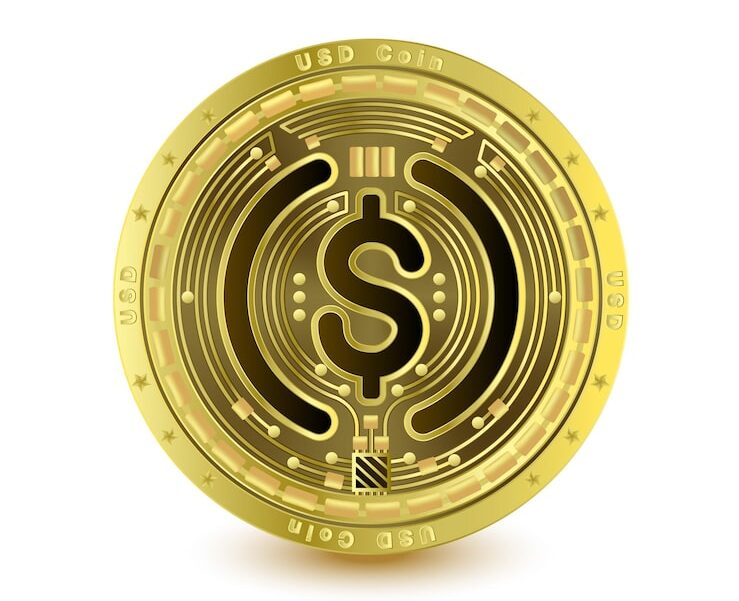
USDC, short for USD Coin, is a stablecoin designed to maintain a value of one US Dollar. This means that 1 USDC is intended to be worth $1 at all times.
USDC was initially launched in 2018 through Center Consortium, a collaboration between Circle and Coinbase. Today, Circle serves as the sole issuer and governing entity of USDC, while Coinbase continues to play a key role as one of its primary distribution and ecosystem partners.
Unlike cryptocurrencies such as Bitcoin and Ethereum, whose prices can rise or fall significantly, USDC is backed by reserves consisting of cash and cash-equivalent assets. These reserves ensure that every USDC in circulation is supported by an equivalent value held in reserve.
How USDC Works
- USDC operates on blockchain networks, allowing users to send, receive, store, and trade digital dollars without relying on traditional banking infrastructure for every transaction.
- When a new USDC is created, an equivalent amount of reserve assets is held by the issuer. For example, when $1 million worth of USDC is issued, reserve assets valued at approximately $1 million are maintained to support those tokens.
- USDC exists on multiple blockchain networks, including Ethereum, Solana, Polygon, Avalanche, Base, Arbitrum, and several others. This multi-chain availability makes it accessible across a wide range of crypto wallets, exchanges, and decentralized applications.
- When users transfer USDC, the transaction is recorded on the blockchain, providing transparency and allowing funds to move quickly between parties regardless of location.
Key Features and Benefits of USDC
1. Price stability and reduced volatility
USDC is designed to maintain a value of one US Dollar. This stability makes it useful for payments, savings, and transactions where price predictability is important.
Unlike many cryptocurrencies, USDC maintains a relatively stable value, making it more suitable for everyday transactions and savings.
2. Fast global payments and transactions
USDC transactions can be completed much faster than traditional international bank transfers, especially when using high-speed blockchain networks.
USDC also allows funds to move across borders within minutes rather than waiting days for traditional international bank transfers.
3. Transparency
Information about USDC reserves and circulation is regularly published. Circle regularly discloses reserve information and, as a publicly listed company, is subject to ongoing financial reporting and regulatory scrutiny.
This gives users greater confidence in the stablecoin’s backing.
4. Global accessibility
Anyone with a compatible crypto wallet and internet connection can send, receive, or store USDC from virtually anywhere in the world.
5. Reserve backing
USDC is backed by reserves that are intended to match the amount of USDC in circulation. This backing helps maintain confidence in the stablecoin’s value.
6. Multi-chain support
USDC is available on numerous blockchain networks, giving users flexibility to choose networks that offer lower fees or faster transaction speeds.
7. Lower transaction costs
Depending on the blockchain network used, sending USDC can be more affordable than many traditional payment methods.
8. Easy access to the crypto ecosystem
USDC serves as an entry point into cryptocurrency markets, decentralized finance platforms, and blockchain applications.
9. 24/7 Availability
Unlike traditional banking systems, USDC transactions can be sent and received at any time, including weekends and public holidays.
What Can You Use USDC For?
1. International transfers and payments
USDC makes it easier to send, receive, and spend money across borders. Individuals use it to transfer funds internationally, while freelancers and remote workers often receive payments in USDC from clients around the world.
Businesses and consumers also use USDC for online and cross-border payments because transactions can be completed quickly without relying on traditional banking systems.
2. Cryptocurrency trading
USDC plays a major role in cryptocurrency trading. Traders often convert their funds into USDC during periods of market uncertainty to reduce exposure to price volatility while remaining active within the crypto ecosystem.
Because USDC is supported on most major cryptocurrency exchanges, it also serves as a convenient trading pair for buying and selling other digital assets.
3. Participating in decentralized finance (DeFi)
USDC is widely used across decentralized finance platforms. Users can lend USDC to earn interest, borrow funds against their holdings, provide liquidity to decentralized exchanges, or participate in various yield-generating opportunities.
Its stable value makes it one of the most trusted assets within DeFi, especially for users who want lower-risk participation compared to more volatile cryptocurrencies.
4. Preserving value during currency instability
In regions where local currencies experience high inflation, rapid depreciation, or economic uncertainty, some individuals use USDC as a way to preserve value.
Since USDC is designed to maintain parity with the US Dollar, it can provide greater stability than holding funds in a currency that is losing purchasing power. This has contributed to its growing adoption in several emerging markets around the world.
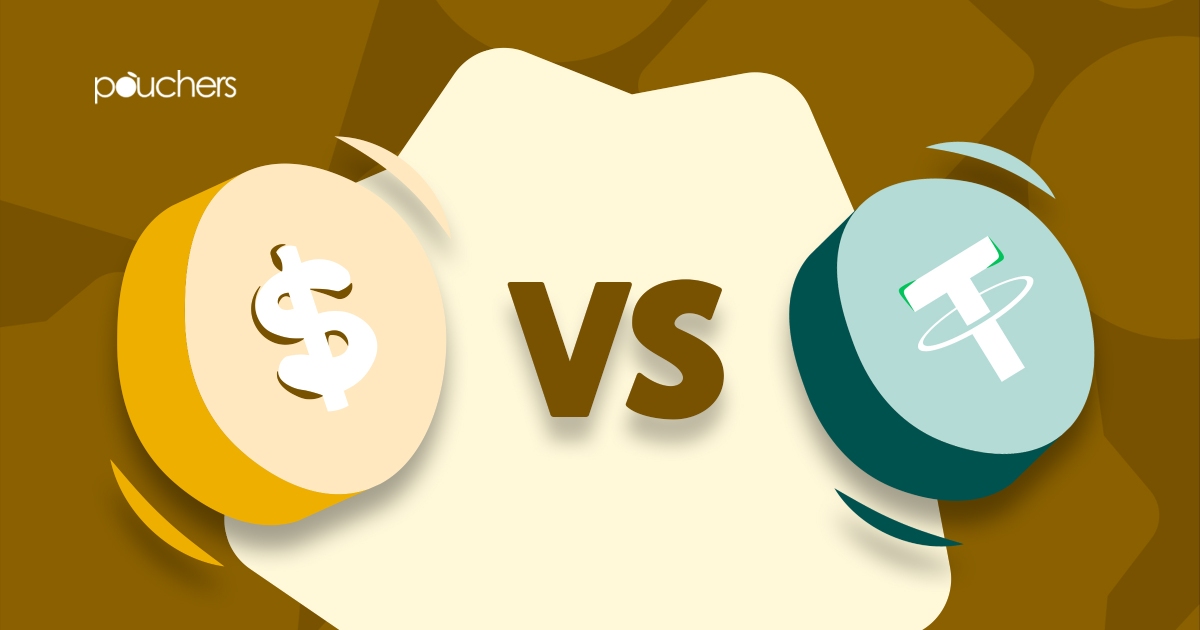
Differences Between USDC vs USDT
USDC and USDT both serve the same core purpose of providing price stability in the cryptocurrency market.
They are both pegged to the US Dollar but each stablecoin has distinct characteristics like issuance, transparency, liquidity, and overall market positioning that influence how it is used within the crypto ecosystem.
The table below compares their key features:
| FEATURE | USDC | USDT |
| Issuer | Circle | Tether |
| Peg Value | 1 USDC = 1 USD | 1 USDT = 1 USD |
| Primary Focus | Transparency and regulatory compliance | Liquidity and widespread trading |
| Reserve Transparency | Regular reserve disclosures and attestations | Reserve attestations, but historically subject to more scrutiny |
| Trading Volume | High | Highest among all stablecoins |
| Liquidity | Strong liquidity | Greater liquidity due to wider market adoption |
| Exchange & Network Support | Available on major exchanges and blockchains | Available on more exchanges and blockchain networks |
| Best For | Users who want transparency and compliance | Traders who want liquidity and market access |
Comparison Between USDC and USD

USDC is a stablecoin designed to maintain a value of 1 US Dollar, but it is not the same as the US Dollar itself (USD).
While USD is an official government-issued currency, USDC is a digital asset that operates on blockchain networks and is backed by reserves intended to support its value.
The table below compares USDC and USD across several key areas:
| FEATURE | USDC | USD |
| Type | Digital stablecoin | Government-issued fiat currency |
| Issuer | Circle | United States Federal Reserve System |
| Form | Exists only in digital form on blockchain networks | Exists in both physical and digital forms |
| Value | Designed to maintain a 1:1 value with the US Dollar | The benchmark currency itself |
| Usage | Used through crypto wallets, exchanges, and blockchain applications | Used through banks, cash payments, and traditional financial systems |
| Transaction Availability | Can be transferred 24/7 on supported blockchain networks | Some transactions depend on banks and payment providers |
| Legal Tender Status | Not legal tender | Official legal tender of the United States |
How To Use USDC For Your Everyday Needs Through Pouchers
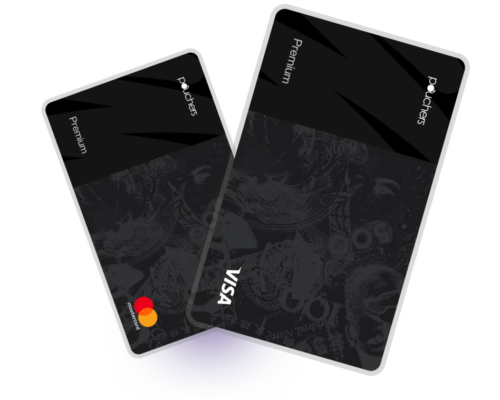
Holding USDC is only one part of the equation. The real value comes from being able to spend those digital dollars on everyday services, online purchases, and international payments.
Pouchers helps make this possible by allowing users to fund their wallets with USDC and access a range of payment solutions from a single platform.
Pouchers is a multicurrency wallet that supports USDC deposits across multiple blockchain networks. Here’s how it works:
1. Fund your wallet with USDC
Users can deposit USDC directly into their Pouchers wallet through supported blockchain networks. Instead of leaving funds in an external crypto wallet or exchange, they can transfer their USDC to Pouchers for spending and payments.
This creates a seamless connection between holding digital dollars and using them for everyday financial needs.
2. Create a virtual Dollar card for online payments
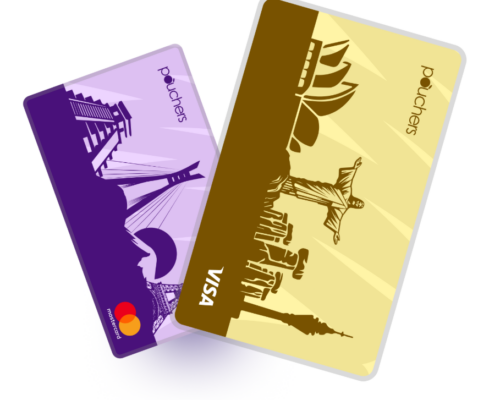
Pouchers offers virtual dollar cards that can be funded from your wallet balance. After depositing USDC, users can create a virtual dollar card and use it to pay for subscriptions, online shopping, software tools, travel bookings, advertisements, and other international services.
This provides a convenient way to spend digital dollars across global platforms.
3. Pay bills and everyday expenses
Pouchers allows you to use your wallet balance for essential everyday payments. You can convert the value of your USDC into practical spending by buying airtime and mobile data, paying for electricity and cable TV, and settling other supported payments directly from the platform.
This provides a convenient way to use your digital assets for real-world expenses without relying on lengthy conversion processes or traditional banking channels.
READY START USING USDC FOR EVERYDAY NEEDS?
Frequently Asked Questions
1. Is USDC the same as USD?
No. USDC is a stablecoin designed to maintain a value close to one US Dollar, while USD is the official fiat currency of the United States.
2. What is the difference between USDC and USDT?
USDC and USDT are both dollar-backed stablecoins, but USDC has greater transparency and regulatory compliance, while USDT offers higher liquidity and wider adoption across crypto exchanges.
3. Is USDC safe?
USDC is considered one of the more transparent stablecoins because it is backed by reserve assets and supported by regular disclosures. However, like all financial assets, it is not entirely risk-free.
4. Can I send USDC internationally?
Yes. USDC can be sent to anyone with a compatible wallet address, regardless of their location, provided the blockchain network is supported.
Conclusion
USDC has become one of the most important stablecoins in the cryptocurrency industry by combining the stability of the US Dollar with the speed and accessibility of blockchain technology.
Its ability to maintain a stable value makes it useful for payments, trading, remittances, savings, and decentralized finance activities.
For users looking to buy, store, send, or spend USDC easily, Pouchers provides a convenient solution. With support for USDC transactions and everyday payments, the platform makes it simple to put your stablecoins to practical use while enjoying the benefits of digital finance.